What are PEX Plumbing Pipes?

Professional plumbers use different types of plumbing pipes to provide efficient plumbing systems for homeowners and commercial facilities. One of the most efficient materials is PEX plumbing pipes.

PEX plumbing pipes are made of Crosslinked polyethylene, a form of flexible plastic. It is used in new building and renovation projects to replace traditional copper and galvanized steel water supply lines. You’ve seen rolls of blue and red PEX plumbing pipe in the plumbing section of your local home improvement store.

Still, you may not be aware that this colorful tubing allows passionate DIYers to replace faulty water lines rather than contact an expert. Continue reading to discover more about PEX—what it is, where it can be used, and all of the benefits and drawbacks of this popular plumbing material.

PEX, Past, and Present

Thomas Engle, a German scientist, developed a means to crosslink ordinary plastic (polyethylene) using radiation in 1968, resulting in a considerably suppler material.

The new plastic, in the form of flexible PEX plumbing pipes (also known as PEX tubing), debuted in the United States in the 1980s, originally for radiant floor heating systems.

old vs new PEX pipes and tubes

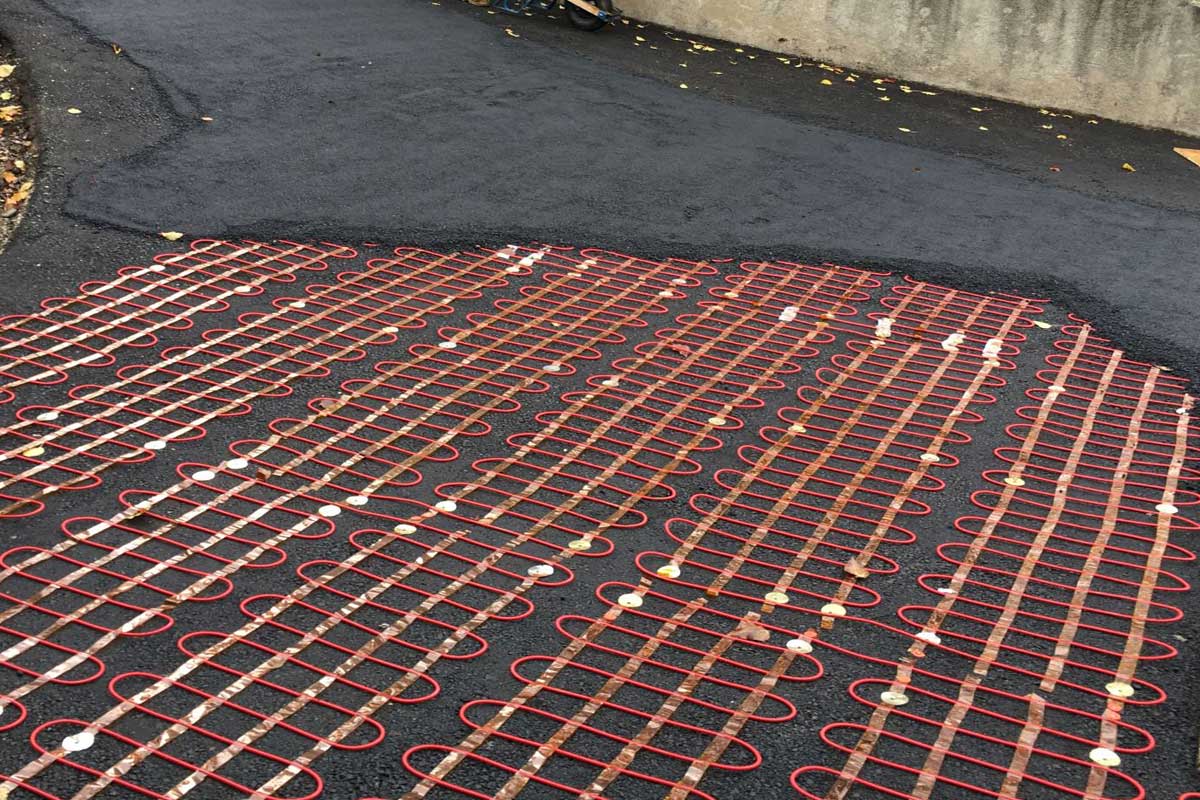
Hot water is pushed through the flexible tubing embedded in a concrete slab to heat the floor and radiate heat to the rest of the room. PEX pipe is used for radiant floor heating quite widely to this day.

Although PEX has been part of European water delivery systems since the 1980s, it was introduced in Canada less than 25 years ago.

When the fittings used to link the pipes broke and leaked, complaints regarding early PEX water systems arose. Improved fittings remedied the problem, and PEX’s popularity skyrocketed. PEX now has about 40 percent market share, with copper still in the lead.

PEX Plumbing Pipe Particulars

PEX comes in various lengths, from modest 10-foot pieces (for minor repairs) to rolls over 500 feet long, used to build a complete home’s water supply system. PEX plumbing pipe has a diameter of 3/8- to 1-inch and is color-coded to make it easy to recognize what each tube is used for.

Although there are three varieties of PEX pipes (see below), the varying colors have no use other than to make it easier for the installer to distinguish which pipe supplies hot water and which delivers cold water.

  • Hot water travels via the red PEX pipe.
  • Cold water travels through the blue PEX pipe.
  • Both hot and cold water may be utilized with the white PEX pipe.
  • Like white PEX pipe, grey PEX tubing suits hot and cold water (although not all DIY centers carry gray).

PEX Plumbing Pipe Particulars

Fantastic Flexibility

Traditional water systems of copper and galvanized steel have a central line and several smaller branches that go to each fixture. Every branch that connects to the main line needs its connector.

Due to its flexibility, PEX plumbing pipe has a significant advantage over conventional materials since it may connect to a PEX manifold (the primary water control system) on one end and then wind uninterruptedly through walls and floors to reach a specific fixture.

It is known as “homerun” plumbing because it avoids the possibility of leakage at many connection locations by employing a single piece of PEX plumbing pipe for each cold and hot water supply fixture in your home.

Benefits and Drawbacks of PEX Pipes

Every system has its pros and cons. We will discuss the Advantage and Disadvantages of PEX plumbing pipe next.

Advantages of PEX plumbing pipe:

  • Unlike installing copper and galvanized steel, installing PEX does not involve soldering.
  • Copper vs PEX Compared, PEX expands, making it more resistant to freeze-cracking.
  • PEX does not corrode, which may happen to steel and copper pipes and result in leaks and water supply pollution.
  • Water moves softly via PEX, which eliminates the “water hammer” sound that metal pipe makes.
  • Red and blue color coding make it easy to distinguish between hot and cold supply lines.
  • With the appropriate fittings, PEX may be linked to existing metal supply lines.

PEX pipes advantages

The Disadvantages of PEX:

  • Using PEX outside is not recommended at all. PEX degrades quickly when exposed to ultraviolet radiation; tubing outside can harden and split in less than a year.
  • Since PEX plumbing pipe does not melt like other recyclable polymers, it cannot yet be recycled. But if PEX becomes more well-known, there will undoubtedly be a greater need for a mechanism to recycle it.
  • Even though installation is do-it-yourself friendly, using PEX calls for specialized connectors and equipment.

PEX pipes drawbacks

Label Lingo

The manufacturing procedure utilized to create the tubing distinguishes the various forms of PEX. When shopping for PEX, you may come across rolls designated with an A, B, or C. Choose the tubing that best meets your requirements:

Peroxide is used in the production of PEX-A. This form of PEX plumbing pipe is the most adaptable of the three and may be used for all household water-supply plumbing demands.

It expands the most when exposed to freezing water, making it the most resistant to cracking in cold conditions. It’s simple to deal with but more costly than B or C. Aside from flexibility, PEX-A offers no substantial advantages over PEX-B.

The moisture-cure process is used to make PEX-B. PEX-B is somewhat stiffer than PEX-A and contains coil “memory,” which causes the tubing to try to return to its original coiled configuration. However, coil memory is not an obstacle to installation.

PEX-B is frequently used for home plumbing since it expands to prevent fracturing when water freezes, yet it is less expensive than PEX-A. PEX-B also has a higher chlorine resistance, making it a desirable choice in places where the water is heavily chlorinated.

PEX-C is created using an irradiation process. PEX-C is the hardest to work with since it is the stiffest; its rigidity makes it the most prone to kinking and splitting when water freezes.

Because of these drawbacks, PEX-C is best suited for brief repairs when bending around sharp corners is not required. The most cost-effective option is PEX-C.

Making PEX plumbing pipe Connections

You’ll need the necessary equipment and supplies to establish watertight connections using a PEX plumbing pipe. The fittings and connectors for each of the following joining methods must be a perfect match to the size of the PEX pipe.

Hundreds of brass fittings are available to connect PEX to existing copper or steel pipes and to make connections to fixtures. Fittings are also provided to connect pipes of various diameters. The five procedures listed below are utilized to make the connections waterproof.

Copper crimping: One of the most prevalent methods of joining PEX is with copper crimping rings, which necessitate using a particular PEX plumbing pipe crimping tool. The copper ring is slipped over the ends of the PEX pipe, and then a fitting is installed.

plumbing PEX pipe connections

The copper ring is then pushed to the end of the tube—over the fitting—and crimped securely in place with a PEX crimping tool.

Expansion connections: The expansion technique of connecting PEX includes stretching the diameter of the PEX tube using a special PEX expander tool before inserting the end of a fitting. The PEX tubing returns to its normal size, forming a watertight seal around the fitting.

Stainless steel clamps (SSC): The SSC technique of joining PEX includes tightening stainless steel rings around PEX connectors using a ratchet clamping tool. The steel ring is placed over the PEX tube before the fitting is installed, just like the copper crimping technique.

The ratchet clamping device is then used to tighten the ring around the tube and fit it by squeezing a tab on the ring.

Compression fittings: A threaded brass nut is slipped over the PEX tube’s ends, followed by a tapered plastic compression ring. The end of the PEX tube is then inserted with a hollow brass tube.

The entire assembly is then put into the end of a threaded fitting, and the threaded brass nut is fitted onto the fitting’s end. As the nut is tightened, the plastic compression ring presses against the end of the brass fitting to form a seal.

Push-fit connections: The push-fit method is the quickest way to connect PEX, which includes purchasing specific push-fit fittings that “grip” the end of the PEX plumbing pipe when fitted over the end.

Push-fit fittings do not require any special equipment to operate, but they require a specific removal ring to be removed from the end of the pipe once joined.

You can appreciate how push-fit attachment functions if you had played with one of those paper tube “traps” that snagged your finger when you inserted it into the tube as a child.

Conclusions

Only use the appropriate tools to make PEX connections for the best results. For example, using pliers to crimp a connecting ring will not result in the same tight fit as using a PEX crimping tool. Make clean end cuts using a PEX cutter to make it easier to deal with.

Because UV radiation destroys PEX piping, PEX is not recommended to be used outside; keep them inside and away from sunny windows. The lifespan of PEX pipe should be at least 50 years due to its adaptability and toughness.

If you are not sure about your plumbing pipes, it is best to call an expert residential plumber for an inspection. Home plumbers will inspect your system and provide the best solution to ensure your plumbing system works efficiently.

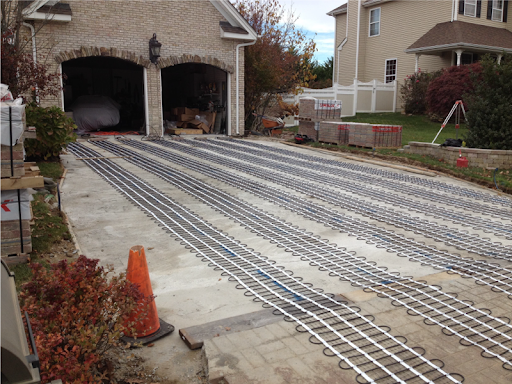
Heated Driveway Systems for Concrete & Asphalt

If you’re looking for systems for heating your driveways, sidewalks, ramps, and other parts in front of your house, you’ve come to the right place to get top-notch information on heated driveway systems. Without further ado, let’s get straight to the point!

There is a bunch of material available for heated driveway systems, such as snow melting mats and cables, which are both known as heating elements or some additional tools. But let’s first look at these systems and how they work.

concrete heated driveways

What are driveway heating systems?

We all want to get out of the house without getting into trouble in the mornings of a cold winter day and try to get the car out of the garage while the concrete and asphalt driveways in front of it aren’t snowy and icy, but the question is: “How can we achieve that?”

Well, the age of de-icing and shoveling has already ended, and we can simply achieve this by using some modern, cool systems called snow-melting systems.

These ice-melting systems have some benefits, and we want to discuss them in the following parts but before that, let’s glance at the different ways you can heat your driveways.

driveway heating systems

What are the different methods for heating concrete and asphalt driveways?

You can have electrical or water-based systems for driveway heating purposes, and both of these radiant floor heating systems are completely versatile, but there are some subtle differences that you are going to find in this part:

  1. The first one is Electrical snow-melting systems. They are made up of heating cables and mats, and these mats can be rolled out whenever you want. You can use them again by putting these metal rods underneath your pavements, driveways, etc. You can also control their heating system, like how much the temperature should be, it’s timing, and also its duration.
  2. On the other hand, we have Hydronic heated driveway systems. They are installed by putting a closed-loop system under the driveway. You can warm the water with a boiler, also known as a water heater.

We highly recommend you learn more about different types of driveway snow melting systems used in Toronto.

Although each of these radiant heating systems has its pros and cons, we will delve into them for heated driveway systems in the next part.

asphalt heated driveway

Pros and Cons of Heated Driveway Systems:

Now let’s take a look at the pros and cons of concrete and asphalt heated driveway systems.

Pros of Heated Driveway Systems

  • You don’t need to physically go outside and deal with the snow on your driveways by shoveling, as mentioned above. Simply turn the system on, and it will do the job for you. Bingo!
  • It won’t do any harm to your vehicles and place. You can simply get rid of ice and snow without ruining your plants, concrete, and so on.
  • You might also reduce the stress of thinking about what will happen to your family, friends, or even pedestrians when walking across your house. They might slip, or even worse, They might file a complaint against you if that happens to a visitor and they get injured. So, let’s bring peace to your mind!
  • Sub-zero temps can destroy your asphalts, and they will last shorter if we don’t make them warm in the long term. Using these systems through hot water or even natural gas in the hydronic method, you can protect and maintain your driveways.
  • But we have yet to talk about the most mouth-watering part. A sweet five-letter word called “money”. Saving money is another important factor for everyone. When it comes to paying money, everyone loves spending less and getting the highest quality, and that’s exactly what these radiant heating systems can do for you. Enjoy saving your budget by using these systems. How about spending $25-75 per hour to have a clearing system for your driveways? NO!!! You don’t need to waste your money anymore. Thanks to radiant driveway heating systems.

pros of asphalt and concrete driveway heating

Cons of Driveway Heating Systems

  • The installation process of electrical and hydronic radiant floors and concrete pouring over the driveways is usually a time-consuming and difficult due to removing the old driveway and implementing the new one. Sometimes we need a contractor to do the installation for us, and they get help from an approach called resurfacing.
  • Although using heated driveway systems might be a cool idea in our generation, we also need to deal with utility bills and high payments. This information is about the resident’s usage of your gas, electricity, or water service. It does make sense to pay more when you use more gas resources for heating your driveways in the end. So, it highly depends on your area to weigh up your options on the table, and one of them is checking if utility bills are already high in your city.
  • Although its installation is time-consuming, it’s money-consuming as well, and it needs a professional to get the job done for you. The costs depend on the square foot, the possibility of snowfall in that area, and some other criteria. It starts from $3000-$5000 to $13,000-$16,000, depending on its size.
  • Repairing it is also risky because, if needed, you must tear out part or all of the driveway. Therefore, make sure to get a warranty.

cons of asphalt and concrete driveway heating

Conclusion

You came this long also to figure out if it’s worth spending such an amount of money and the answer is a short “Yes”! It does. Comparing the pros and cons only confirms this and nothing more.

If you need high-quality driveway snow-melting systems in Toronto, O Plus Plumbing Inc. is always ready to help you create comfortable and safe driveways for your home.

Types of Driveway Snow Melting Systems for Toronto

Driveway heating systems circulate glycol and water through PEX pipes to melt snow and ice. Canadian homes, businesses, institutions, industries, and municipalities use driveway heating systems to melt the existing snow on their driveways without using traditional methods that are time and energy-consuming. However, the most important thing is that what types of driveway snow melting systems are available and which is the best for you.

More buyers wanted heated driveways this year. I, like many Canadians, hate shoveling snow and dealing with contractors. Many don’t want to shovel in the cold early. Snow removal means yearly contracts and reliable trucks that can be wasted if no snow falls. Radiant snowmelt is popular. Radiant snowmelt devices are becoming more common and cheaper.
radiant driveway heating systems

Radiant snow melt systems are still a luxury, but the price has reduced drastically in 10 years. Radiant snow melters are more available because of technology. If your driveway/walkway was over 700 square feet two years ago, you needed a Hydronic (water-based) snow melt system. Hydronic snow melt systems are three times more expensive and time-consuming to install. A homeowner would choose a hydronic system because their electrical panel can’t handle the current needed to run a radiant snow melt system (stove, washer/dryer, TVs, etc.). Recent developments in radiant snow melt controllers allow multi-zoned configurations that manage amperage. Say you have a 200 Amp panel and heating your driveway consumes 150 Amps, leaving you with 50 Amps. If you exceed 50 Amps, the breaker will trip.

Thankfully, homeowners no longer have to risk injury by manually sweeping snow from their driveways and sidewalks. The yearly chore of clearing snow from a driveway can be made much easier with the installation of a snowmelt system. Continue reading this article if you are interested in learning more about the various driveway snowmelt systems that are available in Toronto. This article provides an overview of two distinct types now available on the market.

The Common Advantages of Different Types of Driveway Snow Melting Systems

  • Convenience
  • residents’ and consumers’ security
  • reduced risk of liability
  • reduced costs for operation and maintenance
  • minimal impact on the environment
  • enduring dependability

radiant driveway heating systems

Multi-zonal systems work differently from non-zonal systems, although both work. We try our best to optimize your system’s performance. Before installing radiant snow melt systems, we offer our clients the option to upgrade their electrical panel/service if they want a non-zonal system. Local utilities limit each home’s full service.

400 amp electrical service isn’t for everyone. Grand building may help with service upgrades, system design, installation, user tutorials, and post-installation support. As winter approaches, let us help you install a radiant snow melt system so you can toss your snow shovel, turn a switch, and watch the snow melt on its own.

Two Types of Driveway Snow Melting Systems That Can Help You

Let’s take a deeper look into two types of driveway snow melting systems that homeowners in Toronto can use for their homes.

Hydronic Radiant Heating

You may already be familiar with radiant heating technologies. Radiant heating replaces furnaces and forced air vents. Instead, heat enters via subterranean PEX piping. Hydronic systems pump warm water and glycol through pipes. This technology is also used for home underfloor heating systems.

hydronic driveway snow melting systems

Driveway snowmelt systems work like outdoor Hydronics. Manifolds circulate warm water and glycol through sub-driveway plumbing. This system’s heat melts snow and ice easily and guarantees that additional snow will melt immediately.

Hydronic radiant heating can be used with concrete, asphalt, and stone pavers. Contractors always install such systems when building a new driveway. Adapting an existing driveway can be done in two ways.

Electric Radiant Snow Melting

Electric radiant heating systems act like hydronic ones, distributing heat subsurface. As you may have suspected, the heat source is crucial. Electricity circulates through underground cables to provide heat.

Installation expenses are lower for electric radiant heating systems. Unlike hydronic systems, you won’t require boilers or manifolds. Hydronic systems may have cheaper running costs than electric ones in some circumstances.

Electric radiant snow melt systems can be installed on existing driveways. This approach entails designing a regional system. The contractor marks your driveway with chalk before cutting it with a saw-cutting machine.

electric driveway snow melting systems

The contractor creates grooves for the heating cable in this way. Once the wires are in place, the contractor inserts protective backer rods in the grooves and seals any voids.

Homeowners can’t always remodel or install a new driveway. Meanwhile, electric snowmelt mats can provide radiant heating. These mats work like embedded radiant systems but sit on your driveway.

Unroll the mat, plug it in, and let it work. The heating cables are secured with a mesh. Heavy-duty snowmelt mats can be driven over without damage.

Now that you know the two types of driveway snow melting systems used in Toronto, we recommend learning about portable driveway snow melting mats.

How Do Radiant In-floor Heating Systems Work?

Radiant in-floor heating systems heat a room directly instead of warming the air in the room by utilizing thermal radiation and electromagnetic waves. Radiant systems heat the floor, and that heat spreads up. It is absorbed by other elements in the room, effectively heating the whole space.

In a nutshell, heated floors employ radiant heat technology to warm the flooring, and the heat flows and spreads throughout the space.

disadvantages of radiant heating systems

Types of Radiant in-floor Heating Systems

The two main versions of radiant floor heating systems are electrical and hydronic.

types of radiant floor heating

Hydronic radiant floor heating systems

To heat the floor, hydronic radiant in-floor heating systems use heating pipes beneath it that is heated by a boiler system. The system’s long-term operating costs are lower than those of an electric system, but installation is substantially more expensive.

Hydronic systems take more time to be installed than electric systems and work best with new construction rather than renovating an existing home or business. Unlike an electric one, a hydronic heating system will need routine maintenance.

hydronic in-floor heating systems

Electric radiant in-floor heating systems

Electric heating wires heat the floors in an electric heating system. Installation is simple and quick. Electric systems are also less expensive to install (compared to alternative heating systems), but when long-term power bills are considered, electric systems are a bit more expensive.

Electric systems also do not require constant maintenance. They’ve been installed and are ready to use.

electric radiant in-floor heating

This is How Radiant Floor Heating System Works

Air conduction, radiation, and convection are all used in radiant floor heating. The system may be put together in two ways: with electrical resistances or thin pipes with fluid passing through them.

During construction or remodeling, the radiant in-floor heating systems are integrated into the floor, remaining buried and often invisible since they have been set in concrete to the structure. The flooring material is heated by contact with hot water or electrical resistance, radiating to the air of the indoor spaces.

The law of thermodynamics states that hotter, lighter air flows upward, whereas cold air flows below. The environment is thoroughly heated in this manner, eliminating heat waste and the production of “heat islands” or chilly spots in the environment, as is frequently the case with typical radiators.

Furthermore, many conventional heaters over-dry the air in the room, causing allergies and respiratory difficulties among inhabitants. The radiant in-floor heating systems are substantially simplified in the case of electric floor heating.

how radiant in-floor heaters work

It requires an electrical supply, a thermostat (to adjust the appropriate temperature), and electrical resistance, surrounded by insulating layers similar to garden hoses. These are placed on a thermal blanket, then topped with the floor. The biggest downside of this technique is that it consumes a lot of energy.

On the other hand, the Hydronic radiant in-floor heating systems operate by routing heated water via coils embedded into the floor. The stored water stays in a closed system, which circulates continuously, alternately heating up and losing energy to the surroundings.

It may be heated using various methods, including gas water heaters, diesel oil, solar heating, and electrical resistance. Steel and copper tubes were formerly the most frequent. Most systems nowadays employ flexible and durable materials like polyethylene and PEX.

Pros and Cons Radiant Floor Heating Systems

There are several advantages to installing an underfloor heating system. The following are a few examples of the pros and cons. If you want to know the details, we recommend you to read 9 important pros and cons of in-floor heatings.

Pros:

Invisible Hardware in Livable Areas

Unlike HVAC systems, space heaters, radiators, and other heating choices, underfloor heating systems are designed to be unnoticeable. Consequently, they are almost undetectable in your living areas, making them an aesthetically pleasing heating alternative.

Radiant in-floor heating systems are Energy-Efficient and Cost-Effective

Radiant heating systems, as opposed to gas or boiler-based systems, are energy-efficient and cost-effective. Traditional radiators must be heated to a higher temperature of 75 degrees Celsius before they can heat a space.

A radiant heating system must only reach 30 degrees Celsius to warm the room. There will always be some duct loss with duct-based heating systems.

Radiant in-floor heating systems, on the other hand, heat the floors directly, resulting in minimal energy loss. Radiant flooring is so energy efficient that they save 15% on heating expenditures on average.

Fewer Limitations on Interior Design

You can enjoy your entire room with radiant floor heating instead of having huge radiators on the wall. When you don’t have to bother about designing around radiators, your design options expand.

advantages of radiant heating systems

Cons:

The Need for New Flooring

You must remove and replace your current flooring to install a radiant heating system. This is why you should install floor heating systems when rebuilding and before you finish flooring.

Installation time for radiant in-floor heating systems

A self-leveling compound must be used on top of your floor heating system. This compound must be thoroughly dried before you can install the floor covering. The drying process takes a day or two. (Installation time is a little longer if it is a hot water radiant floor heating system.). So, it is always better to contact professionals for radiant in-floor heating services.

disadvantages of radiant heating systems

Conclusion for Underfloor Heating System

Radiant in-floor heating systems are a simple and cost-effective solution to warm your house and keep your feet warm.

Although installing radiant heating is more expensive than regular radiators, several options could work within your budget. It’s important to remember that underfloor home heating systems produce significant cost savings on your energy bills in the long run.


What Causes Discolored Water? How to Solve it?

Discolored water — or what appears to be contaminated water — is a surprise when it comes out of your faucet. You should look into what is causing the discoloration in your water right away. Sudden changes in the colour of the water can indicate defilement, changes in mineral concentration, or other problems within the home that should be addressed. If your water appears dirty, it is most likely due to minerals or sediments in your supply. There are several solutions to this problem; continue reading to learn more.

What Exactly Is Discolored Water?

Discolored water is typically yellow, brown, or orange. If discoloration suddenly appears, it may indicate a change in your home’s filtration or water supply. It is commonly composed of minerals, rust, and other sediments that influence its appearance.

What Causes Water Discoloration?

A high concentration of common minerals in the water supply, such as iron and manganese, is the primary cause of discolored water in the home. Minerals are heavier than water and can settle in pipes when water consumption is low. Since the water has been sitting stagnant within the lines, you will take note of discoloration in your water after you begin to turn on the tap after a long excursion. As you run it, the water should return to its standard colour.

If the water changes colour within the same day and there is no change in usage, you should look into the cause of the discoloration. Possible causes include:

  • Corrosion of old water lines
  • Filtration system failure
  • Variations in city water pressure
  • There has been a lot of rain in your area.

Discolored water could also indicate recent work on the city’s water system, which has changed the flow level through the water lines.

Additionally, it is better to prevent brown water before it happens. One of the best ways is to avoid plumbing pipe corrosion.

reasons of discolored water

Why is My Water, Turning Brown?

The cause of brown water may be similar to that of yellow water. A high press or manganese concentration within the water supply is the foremost common cause of discolored water within the restroom or from your taps. A sudden onset of brown water in a well, especially a shallow one, could indicate surface filtration. You should not drink the water because it may contain contaminants from the ground level.

How Do I Clean Dirty Water?

There are a few methods you can try to get rid of dirty water:

  • For 20 minutes, run cold water from your faucet. If the water clears, the discoloration is most likely caused by sediment stirred up in the pipes after a period of inactivity.
  • If your water is mostly clear but occasionally has some brown, consider installing a filtration system or a water softener to remove hard minerals from your supply.
  • You can also determine whether the brown water is hot, cold, or both. If only hot water is a problem, your water heater is to blame. Because scale or rust could affect the hot water, it’s time to flush the water heater.
  • If you have a well and have recently experienced heavy rain, the discoloration could be caused by changes in the water table. You may need to improve your filtration system to remove minerals from the water.
  • If you’re on a city grid and the problem persists or is a known issue in your neighbourhood, contact the city to resolve it.

If the solutions above did not help you clean the discolored water in your plumbing system, it would be best to contact a residential plumbing contractor ASAP.

get rid of discolored dirty water

What is the Safest Drinking Water Pipe?

Water, particularly drinking water, is one of the most critical resources on the planet. Water is essential to life on earth. Our bodies, like the earth, are composed of 70% water. That is why running water is one of the necessary utilities in our home. We can cook our food, clean our dishes, wash, and, most importantly, drink water when we have access to running water.

Planning out your plumbing system requires as much attention as the siding, wall colour, and room layout when building a house. There are numerous options available on the market for pipes in your home. This may cause you to wonder what is the safest drinking water pipe. Keep analyzing as we explain which pipe cloth is the most secure for ingesting water and some pipe substances you ought to avoid!

copper drinking water pipes

Safest: Drinking Copper Pipes

It may come as a surprise, but copper is one of the best pipe materials for clean drinking water. Look for copper pipes with lead-free joint materials, in particular. This combination is exceptionally long-lasting and robust. With proper care, copper pipes can last up to 100 years.

However, it would help if you first determined the pH level of your water. If the pH of your water is less than seven, you may need to find a way to balance the acidity, such as using a cleaner. Otherwise, the edge of the water could corrode the copper. If the copper pipes in your drinking water corrode, it can cause stomach problems.

pex plumbing pipes

 Other Water Plumbing Pipes that are Safe for Drinking Water

Plastic pipes, such as CPVC and PEX, are suitable for use with drinking water. In general, these pipes would be unsafe in a cold climate. CPVC and PEX pipes, on the other hand, can last a very long time in our beautiful home of Hawaii. In addition, unlike polybutylene pipes, plastic-based pipes do not degrade when exposed to moisture.

PVC pipes are the most well-known type of plastic pipe, but they have some significant drawbacks. If that pipe transports water as hot as 140 degrees Fahrenheit, it may warp and fail. PVC pipes should not be used for your primary drinking water supply. If you want to learn more about these piping materials, read about different types of plumbing pipes.

When was indoor plumbing invented?

Most homes did not have sophisticated residential plumbing until the mid-19th century. Indoor plumbing was adopted once cities created effective water and sewage systems. Nearly all American homes today have indoor plumbing.

However, in the past, the indoor water supply was a privilege reserved for kings, queens, and rich members of society.

flushing toilet invention

The Flushing Toilet

Crete King Sir Minos owned the first flushing toilet. This was the time when was indoor toilets invented. The seat of the flushing toilet was made of wood. Crete had a sophisticated water delivery system at the time.

It’s been more than 2,800 years since then. In 1594, the concept of a flushing toilet was revived. For his godmother, Queen Elizabeth I, Sir John Harrington designed a flushing toilet.

It took another two hundred years for someone else to consider making the toilet a reality. People used to use outhouses with holes in the early 1800s. The aim was to create a sanitation space in the house that was free of mess and stench.

Thomas Jefferson, an architect, constructed an indoor urinal. He devised a pulley mechanism for his servants to remove the chamber pots. The arrangement had a wooden bench with a pot on top. The system was deemed unhealthy and unsightly by the designers of New York City’s Central Park.

indoor plumbing in Tremont hotel

Indoor Plumbing and the Tremont Hotel Case

Architect Isaiah Rogers created the system for his Boston hotel, The Tremont Hotel, in 1826. Tremont Hotel was ranked among the best in the United States due to its indoor plumbing.

On the ground level of the hotel, there were eight closets. The same source that provided cold water for the kitchen and laundry also supplied the bathrooms located in the basement.

Additionally, there were bathtubs made of tin or copper with a gas furnace connected to one side to heat the water. Since the water had to circulate within the tub before it warmed, the arrangement was inefficient.

Even before 1800, bathhouses were widespread in the Northeast. Hotel rooms and urban homes didn’t have baths until much later. A water supply and waste management system were required to make bathtubs.

Water entered the Tremont hotel through a metal storage tank placed on the top. The hotel pumped water to the rooftop tank using a steam pump. A carriage then transported the sewage from the house.

Rogers sought to upgrade his work at the Tremont Hotel after five years, but this time at a different hotel. He created the Astor House, a six-story building with 17 rooms and water closets.

Three hundred visitors may be accommodated in these closets. The first hotels to offer water closets, regarded as contemporary features, were the Astor House and the Tremont.

history of indoor bathrooms

The Indoor Bathroom and Indoor Plumbing

Before the 1800s, bathing wasn’t always as convenient as it is nowadays. Since there were no sophisticated heating systems or indoor plumbing, many individuals would only take baths on special occasions or when advised to do so by a physician.

Since there was no indoor plumbing available, people had to use a hand pump to fill and drain the bathtub so they could take a bath. However, the advent of sanitary sewers in 1845 allowed for the construction of indoor restrooms.

There was a venting issue in the early 1900s since no one understood how to size the pipe. The solution to this issue came later, in 1874.

Early Pipes for Indoor Plumbing

Early Pipes for Indoor Plumbing

Although the systems worked in hotels and wealthy people’s houses, the pipes were ineffective. They utilized wooden pipes since iron and lead pipes had not yet been developed. They’d drill holes in trees, preferring elm and hemlock.

The wooden pipes imparted a woody flavour to the water. It would also be infected with insects and frequently break, particularly when used underground. People still wonder how you can avoid home plumbing pipe corrosion.

Cast iron pipes began to gain prominence in 1804. The first city to make use of these pipes was Philadelphia. Due to its reliance on the Schuylkill River as a water source, the city was also the first to deploy large waterworks.

When Chicago built a huge sewer system, it imitated Philadelphia’s model. Chicago Waterpower could provide water to the whole city through a network of twin tunnels.

To reach Lake Michigan, the system went two kilometers. To transport water from the lake and back to town, the city employed steam engines powered by coal. In 1885, E.S.

Chesbrough’s complete sewer system for the city of Chicago became operational. However, it is asserted that New York served as the inspiration for the Chicago sewer system.

At this point in the indoor plumbing timeline, the American water closets were of lower quality than their European counterparts. As a result, in the early 19th century, most closets in the United States were imported from Europe. Cast iron pipes were also widely utilized during this period and were rather common.

sanitation system

The Need for Sanitation Systems

The invention of the modern toilet occurred in 1910. Before then, there were various restrooms, but this toilet permanently altered the dynamic. This toilet utilized the current bowl and cover and a raised water tank. The contemporary toilet was initially created in this manner.

Disease outbreaks such as cholera and typhoid prompted the development of stronger indoor plumbing and sewage systems that directed sewage away from the house.

Plastic pipes, which are still in use today, were invented in 1966. There was a copper scarcity at the time. Plastic pipes were created as a result of manufacturers’ need to adapt. By that time, most homes in the United States had added indoor plumbing during construction.

Conclusion

And this was the brief history of indoor plumbing systems. Indoor plumbing nowadays focuses on efficiency. Engineers comply with current and historic regulations established by governments worldwide.

The English Public Health Code, established in 1848, was the standard regulation for indoor plumbing before modern plumbing systems. Today, plumbers are familiar with the rules governing plumbing in various states.

The plumbing companies understand these requirements and will design your system to be safe and efficient. Some can design a residential plumbing system with the best three steps.

Interior plumbing has become a reality because of the development of indoor boiler room plumbing systems, improved plumbing materials, and sewage treatment plants.

12 Must-Know Types of Plumbing Water Valves – Best Guide

Water is the element of life, purity, and health. None of us can survive and stay healthy without clean water. So, that is why plumbers started creating systems for us to have access to water supply 24/7 without having any problems. Plumbers and engineers design and install systems and provide residential plumbing services to help us have a better and easier life. But what are the main components of these systems? The answer to this question is exceptionally vast. Thus, we decided to focus on today’s different types of plumbing water valves. You can always visit our blogs to learn NEW exciting things about plumbers and plumbing systems.

most common plumbing water valves

What are Plumbing Water Valves?

Plumbing water valves are created to partially or entirely restrict water flow through your home’s pipes. These valves are also used in commercial plumbing systems.

Plumbing water valves come in a range of various styles and types, depending primarily on how and where they will be used. This means that maybe a specific part of your system will require a form of a simple faucet valve to stop the water flow through the faucet. On the other hand, another section can require more involved plumbing water valves, such as a butterfly valve designed to be used on larger diameter piping used mainly in industrial plumbing designs.

The List of Most Important Water Valves You Need to Know

Differentiating various types of plumbing water valves can be difficult at first. Still, by learning each one individually, you can better understand the designs and uses of each water valve.

Let’s get to the real deal now.

Gate Valves

1- Gate Valves are The Most Common Plumbing Water Valves

Plumbers definitely use gate valves for their residential plumbing services. These types of plumbing water valves allow residents to control water flow instead of switching between open and closed positions.

Due to the controlled open and close mechanism of gate water valves, these plumbing valves are perfect for homes that experience recurring water hammer issues.

Ball Valves

2- Ball Valves are Popular Plumbing Water Valves

The second most common plumbing water valves are the ball valves. These water valves are reliable and are not prone to seizing or leaning. However, it would be best if you remembered that they do not offer the same accurate control over the water flow over time.

These water valves are widely used in residential plumbing systems and consist of a lever that can be rotated 90 degrees. With this lever, you can control a hollow half-sphere within the valve.

Globe Water Valves

3- Globe Water Valves (Stop Valve)

These plumbing water valves are perfect for water lines that have larger diameters. Globe valves are more significant than gate residential plumbing valves due to their bulky internal structure.

Glob water valves have horizontal internal baffles with an opening that can be blocked or restricted by a plug that is lowered or raised by turning the valve handle.

These plumbing water valves are also suitable for users who want precise water flow control. So, they can be good alternatives to gate valves.

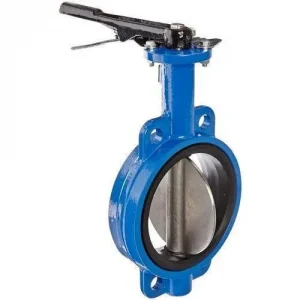
Butterfly Valves

4- Butterfly Valves are Perfect for Commercial Plumbing Systems

The name butterfly valves are because of the rotating disk in these plumbing water valves. The disk inside these valves has a thick center holding the valve stem and a thin wing or fin on either side, miming the butterfly’s appearance.

When you turn the control level of butterfly valves, what you actually do is that you rotate the disk and allow it to fully or partially restrict the water flow through the valve.

The best choice for water pipes with 3 inches or larger diameters is a butterfly water valve. This means that you can rarely find these plumbing water valves in home plumbing systems. Additionally, butterfly valves come at a higher price than other home plumbing valves due to their size and style.

Diaphragm Water Valves

5- Diaphragm Water Valves

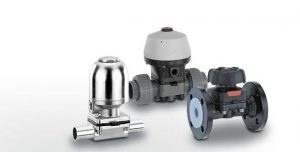
Diaphragm water valves are used to limit the water flow in your piping and plumbing system. These plumbing water valves have a wheel or knob that you can use to close and open the valve for the water to flow freely.

By rotating the knob or wheel, you adjust the diaphragm for flow control.

Pressure Relief Valves

6- Pressure Relief Valves are Also Important Types of Plumbing Water Valves

Pressure relief valves do not function similarly to regular and standard water valves. These valves do not restrict or prevent water flow; instead, they protect the plumbing system by releasing steam and hot water if your system’s pressure exceeds the level it should be.

These types of plumbing water valves are generally used on hot water tanks to prevent overheating, deformation, and rupturing, which can be caused due to excessive pressure.

Pressure relief valves feature a spring mechanism that reacts to the compression and pressure when they get too high. The spring compression in these systems opens the valves to release water and steam, resulting in pressure reduction.

See water valve prices in Canada.

Check Valves - O Plus Plumbing Inc. | Leading Plumbing, Plumber & Drain Company in The Greater Toronto Area - Professional Plumbing & Drain In Toronto and GTA

7- Check Valves

Check valves are not as typical as other types of plumbing water valves, and they also do not have the same ability to control or stop the water flow. But you should still use check valves in your systems. On the other hand, check valves are crucial components of any plumbing system, whether commercial or residential.

Check valves are plumbing valves that are explicitly designed to allow water to rush through the inlet section of the valve. The force of the flowing water pushes open a hinged disk in the valve system, ensuring that the water pressure is not reduced. However, this hinged disk prevents the coming water from flowing through the valve in the exact opposite direction as the imparted forces on the disk push it closed.

The primary usage of check valves is for preventing backflow in all types of plumbing systems which can lead to cross-contamination issues between your residential plumbing fixtures and appliances.

So, now you can understand that check valves are the types of water plumbing valves that are best for backflow prevention in pumps, sprinkle systems, safety applications, and other residential plumbing systems that may be at risk of intermittent backflow damage.

Note: Backflow in plumbing systems occur when the pressure within the sprinkling system or water tank and a pump is lower than the pressure within the primary water system. This is where check valves play a crucial role in your plumbing system.

Supply Stop Valves

8- Supply Stop Valves

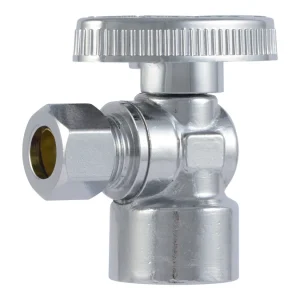
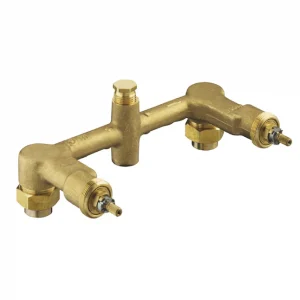
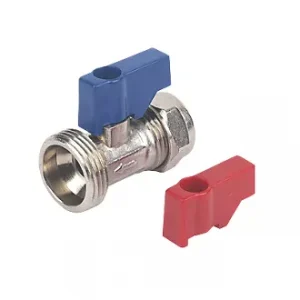
Supply stop valves are specialized water valves designed to be used with plumbing fixtures such as sinks, toilets, dishwashers, and more. These valves are called supply inlet or outlet valves and come in various types, including angles, straight, compression, and quarter turn. So, it is best to contact a professional plumber to see which type can be the best for your application.

You can find these valves on the toilet water supply lines, and they are generally used to stop the water flow to specific plumbing appliances. Supply stop valves also help plumbers isolate appliances and fixtures in your home to provide faster, easier, and better quality plumbing repairs and services.

Faucet Water Valves

9- Faucet Water Valves

Another specialized plumbing water valve is the faucet valve, which is available in a wide array of styles. However, the primary function of these valves is to allow you to control water flow through your faucets, shower, or tub.

Different Styles of Faucet Water Valves Include:

  • Ball valves: Simple mechanism used for turning the water on and off with little room.
  • Cartridge Valves: Mostly used for showers to control the water flow.
  • Ceramic Disc Valves: These valves consist of two ceramic disks that rotate against each other.
  • Compression Valves: These water valves utilize a rod and plug for sealing the valve seat.
  • Globe Valves: The good example of a compression valve.

Washer Water Valves

10- Washer Water Valves

Washer valves are common plumbing valves that are used for shutting off purposes. These water valves stop the water leakage and flow with a washer.

You can open and close washer valves by using a round handle. However, the problem with these water valves is that they usually wear out quickly and will not be able to properly shut off the water flow. When your valves wear out, you need to change them ASAP with a new one that has the correct size.

Plug Valves

11- Plug Valves

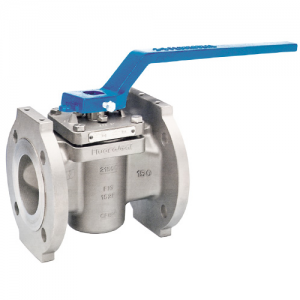
Plug water valves usually feature cylindrical plugs that allow you to control water flow by rotating in the valve’s body. When these water valves are open, the water flows through the plug, and the water flow is blocked when you close it.

You can open and close plug valves with a handle.

Needle Valves

12- Needle Valves are the Last Type of Plumbing Water Valves for Today

Needle valves are the last item in our complete list of the must-know types of plumbing water valves.

These plumbing valves have a small port and needle-shaped plunger, allowing the valve to have accurate and precise water flow regulations.

Needle water valves are usually used for applications that need a lower flow rate to maintain.


Why professional cottage plumbing services Is Essential to Ensure Safe Drinking Water

If you own a lovely country retreat in the countryside, the last thing you want to discover when on vacation with your family or friends is that your water quality has worsened during the winter and will require professional cottage plumbing services.

Worse, you may discover that it is no longer safe to consume after getting ill. However, water quality problems can develop at any time and drinking water that is clean and hygienic is crucial for remaining fit and healthy. So, this article is intended to assist you to understand the importance of water quality and the need to hire professional cottage plumbing services.

Without a source of clean water, you run the danger of dehydration, which can lead to long-term problems and jeopardize your health. Many factors contribute to water getting unsafe to drink, which almost always requires you to hire professional cottage plumbing services to maintain healthily. Some of the reasons water can get unsafe to drink can be:

  • Exposure to metal pollution
  • Microbial pollutants
  • Septic systems that have not been checked by professional cottage plumbing services
  • Sewage leakage
  • And Unfiltered residential plumbing systems

cottage plumbers

What Are the Benefits of Clean Water Consumption?

The consumption of clean water is vital to the health of any living being, not only humans. Drinking unsafe water can result in an array of ailments more serious diseases and even fatal circumstances, and you will almost always need the assistance of professional cottage plumbing services to ensure that your water is safe and free of any unhealthy pollutants.

Therefore, in situations in that you may have not been able to check the water quality for months like a cottage, having professional cottage plumbing services take a look at the water quality can be a lifesaver.

Clean water provided by professional cottage plumbing services is required not just for drinking but also for sanitation. If clothing or even the body is washed with polluted water, disease transmission will increase. Cooking, cleaning, and other such duties that are a part of our daily life are also similarly affected.

A Lack of Professional Cottage Plumbing Services Can Lead to Serious Diseases

Cholera, typhoid, e-coli, and hepatitis are some of the fatal medical disorders caused by the ingestion or use of polluted water. Clean water is crucial not just for illness prevention but also for overall health. Consider the dangers that you, your friends and your family may face when you’re in the presence of unsafe water and you’ll almost immediately realize the best course of action in such cases is to contact your local professional cottage plumbing services.

How Can Water Be Polluted and What to Look Out For?

As we’ve already mentioned, there’s a plethora of things that can make water unsafe for consumption, but how should we recognize these risks and what are the factors to consider before the matter becomes too serious that you’ll need professional cottage plumbing services? For example, the local drinking water supply in certain areas has a high hard water content, which implies it contains a high amount of minerals.

This can be harmful because if the mineral concentration is too high, plumbing and water supplies might get clogged and unhygienic conditions can develop. Pipelines can also deteriorate as a result of minerals.

professional cottage plumbing services can help in the occurrence of full block and help to unclog bathroom sinks or even completely replace some of the pipes to ensure safe water is being used in your home.

The Necessity of Professional Cottage Plumbing Services for Remote Homes

The water of remote homes will almost always be provided with either well water, lake water, or holding tank water. If the water comes from a holding tank, you should have it cleaned and replenished by professional cottage plumbing services every year when you return in the spring.

professional cottage plumbing services can install this treatment at the “point of entry” to the cottage, where the main water lines enter the structure, and it will treat all water carried into your home. Another option that professional cottage plumbing services can apply is a “point of use” system, in which treatment units are put at individual drinking water fixtures, such as the kitchen sink.

This would entail having the water tested by professional cottage plumbing services annually when you return from the winter, as well as installing a filter/treatment system. This will provide you and your family with safe, clean drinking water if your water comes from a well or a lake.

How Do Professional Cottage Plumbing Services Help Solve This Issue?

Professional plumbers can assist you and your family by providing a comprehensive range of professional cottage plumbing services that can help prevent and resolve all of your plumbing issues. The expertise of professional cottage plumbing services can ensure the safety of your and your family’s health by employing health-related strategies and approaches.

And of course, it’s not only about the quality of the drinking water. After all the risks and hazards that unsanitary water can have, you’ll undoubtedly want to the professional cottage plumbing services to make sure your restrooms are in fine working order as well. After all, plumbing systems are often interconnected, so you should ensure that everything is in good working order.

What Causes Plumbing Leaks?

When plumbing leaks occur, trouble is sure to follow. However, why do pipelines leak in the first place? Oxidation, cracking, and broken pipes only lead to significant water damage. The issue is a majority of your home’s pipes are hidden from view.

So, how can you tell if you have plumbing leaks before you have a major mold problem? There are several typical reasons for plumbing leaks, but you wouldn’t know what to check for if you didn’t know what to look out for.

We have your back. There are different types of plumbing leaks. The most common causes of pipe leaks are listed below. Your plumber is usually the best person to start with if you want to find out what causes pipes to leak.

fixing plumbing leaks

Plumbing Leaks Caused by Broken Water Seals

There are seals around the water connections on every home device linked to the plumbing system. It prevents you from having your indoor pool and keeps the flow of water where you want it.

You may have a damaged water seal if you see a lot of “condensation” (or just literal pools of water) surrounding your dishwasher or refrigerator. This might be why plumbing leaks have happened in your house in this scenario.

High Water Pressure Leading to Pipe Leaks

You want lots of water pressure in your shower, but your pipes can only take so much. A home’s typical pipes can withstand maximum water pressure of 60 psi. Your psi should be between 40-45 psi.

Having high water pressure in the shower might be great, but not at the cost of causing plumbing leaks.

Plumbing Leaks Caused by Pipe Corrosion

Water pipes rust. It’s unavoidable. We tend to disregard “little” problems in our boiler room plumbing, but those “minor” problems quickly become major ones. If you detect any discoloration, leakage, or warping in your copper pipes, it’s time to call a plumber.

Before the minor cause that makes the pipes leak makes everything worse, have a plumber analyze the issue as soon as possible. The water quality is impacted by rusting pipes, which eventually affects your health.

There are methods on how you can avoid home plumbing pipe corrosion.

Plumbing Leaks and Broken Pipe Joints

Pipe joints are necessary to connect pipes from one end of your residential plumbing system to the other. Pipe joints are the most susceptible components of your piping systems. Like your copper pipes, your joints will rust and corrode over time.

It occurs considerably faster since the joints have a significantly smaller surface area. When investigating what causes plumbing leaks, it’s usually a good idea to examine your pipe joints. The only issue is that most of the pipe connections in your home’s plumbing systems are hidden.

Using your ears is the easiest method to check for damaged pipe joints causing plumbing leaks. You may hear a lot of clinking and clanging when you turn on the hot water. This might be due to faulty pipe fittings.

Clogged Water Lines Cause Plumbing Leaks

Clogged drains are annoying and can cause disaster, especially in commercial plumbing systems. Still, they are easily remedied using drain cleaning. Clogged or blocked water lines are responsible for plumbing leaks, water damage, and damaged pipes.

Water constantly backs up when your water pipes are clogged. This significantly increases the water pressure in your plumbing system, which can easily lead to leaks.

Sneaky Tree Roots Can Cause Plumbing Leaks

Other threats to your pipes lie outside of your home. Growing root systems in your yard can strain your pipes, especially in compacted soils. Excessive pressure may easily cause pipes to break and leak.

If you find unusual pools of water on your lawn, you may be dealing with a busted pipe or some plumbing leaks.

Rapid Temperature Change

This is especially problematic during the winter. Rapid temperature variations in the water (or outside temperature) cause your pipes to expand and shrink. This will cause your pipes to break over time as the walls of the pipes become thinner and thinner.

This happens naturally when your pipes age, but significant temperature swings can worsen it. In most plumbing systems, protective layers are put on pipes, especially in industrial plumbing systems, which can help delay this type of damage to the pipes.

Knowing the Causes, the Signs, and the Solution for the plumbing leaks

So you now understand what causes plumbing leaks and the fundamental symptoms. One of the options is trying to do your plumbing repairs by yourself.

Since there are different types of plumbing leaks, there is no need to take any risks. When you need your pipes fixed or changed, always call a professional. Still, it’s a good idea to learn about quick plumbing fixes everyone should know.

What is a Pipe Leak Tape – Everything to Know

Several types of pipe leak tape can be used to fix various plumbing leak issues. To patch leaking pipe joints, use pipe thread tape, often called “Teflon” or “Plumber’s” pipe.

Use silicone tape, also known as “leak repair,” “self-amalgamating,” or “fusing” tape, to patch hairline cracks in pipes or other non-joint leaks.

The uses for pipe leak tape in plumbing are surprisingly wide. You must have the correct pipe leak tape and know how to use it. The various repairs that can be made using typical types of pipe leak tape are listed below.

fixing a pipe leak with a tape

What is Pipe Leak Tape?

Pipe thread tape and silicone tape are the two types of tape commonly used in repairing leaky pipes. Both are often can be found in hardware stores and have various uses:

Pipe thread tape

This is also referred to as “plumber’s tape,” “PTFE tape,” “Teflon tape,” and “thread seal tape.” It is used to lubricate the connection between the joints to make threading quicker and disassembly simpler and to help to establish a watertight seal between plumbing joints.

Silicone tape

Because this type of pipe leak tape is only self-adhesive, it is also known as “self-amalgamating tape” or “self-fusing tape.” It sticks to itself, not the pipe, as other tapes do. A temporary waterproof seal can be established around a pipe leak by wrapping silicone tape around it.

They come in handy, especially in the boiler room and commercial plumbing systems with many pipes and might have electrical equipment.

When Should I Use Each Pipe Leak Tape?

Silicone tapes and pipe thread have very different uses. You should never use silicone tape on pipe threads, and pipe thread tape won’t properly fix non-joint pipe leaks. Instead, make sure you apply each tape as directed:

Seal leaking joints with pipe leak tape

Pipe joints may begin dripping if the connection between them has become loose or the tape or putty that seals the connection has become worn out. These two issues can be resolved with pipe thread tape.

Fix fracture leaks with pipe leak tape

The connection between your pipe’s joints can be loose, or the pipe leak tape that seals the connection might have worn out, causing your pipe’s joints to leak. Pipe thread tape can be used to fix either of these problems.

Get some pipe thread tape if you find that the pipe leak is coming from a joint.

Pipe Thread Tape on Leaking Joints

The old pipe leak tape between the joints will be replaced with pipe thread tape to fix a leaky joint. You must disconnect the connection before wrapping the tape around the pipe. Initially, shut off the water.

Unscrew the leaky pipe junction. Remember which way the pipe needs to be turned to be screwed into and unscrewed from the joint. The worn-out seal should then be removed before you start applying the pipe thread tape.

In the opposite direction, where you will screw the pipe back in, wrap the tape around the thread. Starting with the second thread from the bottom, wrap the tape four to six times around. Make sure the threads and tape are firmly attached.

Check for leaks after wrapping the pipe to the end and screwing it back into the junction.

a repaired pipe with a pipe leak tape

Silicone Tape for Fracture Leaks

This method is even easier. Once you have located the leak and are certain of its location, turn off the water. Dry the pipe area around the leak as much as possible before starting to tape it off.

Wrap the tape as firmly as possible, crossing it over itself multiple times. Wrap the tape around the region surrounding the leak. For maximum results, ensure the seal you’re making is as tight and secure on the pipe as possible.

Can Pipe Leak Tape Fix a Leak for Good?

A similar operation we explained may be done using regular pipe thread tape and can last for years. You can consider it a long-term (but ultimately temporary) remedy if the joint isn’t leaking.

While you look for more long-term solutions, silicone tape should only be used as a temporary treatment. Use silicone tape to stop leaks from growing worse or from wasting more water while you wait for a plumber, but never as a long-term solution.

Overall, pipe leak tape is surprisingly reliable and practical for many plumbing issues. By replacing joint seals with pipe thread tape, you can maintain the quality of your residential plumbing system with a quick do-it-yourself project.

Suppose you require professional assistance because pipe leak tape can’t create the proper seal. Fortunately, there are professional plumbers always just a phone call away. They will quickly and correctly solve the plumbing leak issue, whether pipe leak tape is necessary or not.