How Can You Avoid Home Plumbing Pipe Corrosion?

Home plumbing pipe corrosion is one of the most prevalent issues impacting home water supplies and systems. It degrades the overall quality of the water and produces a foul flavor. Furthermore, copper and lead may seep into drinking water and create health hazards.

Copper poisoning in water can cause intestinal issues in the short term and liver and kidney damage in the long run. Lead poisoning can harm children’s physical and mental development. Let us first explore some of the most prevalent causes before we discuss measures to avoid home plumbing pipe corrosion.

  • Industrial plumbing systems incorporating copper pipes can reduce the water’s pH level and cause corrosion in the water.
  • Oxygenated water can form rust in metal pipes that damages the lines and causes severe health hazards.
  • Mineral buildups can reduce the water quality and form clogs
  • In some systems, hot water can cause home plumbing pipe corrosion and make them toxic.

Cleaning the Pipes Before Installation

Pre-installation pipeline cleaning is one of the most efficient strategies to avoid water. Everyone should clean the lines of commercial or residential plumbing systems before installation and remove all dirt to extend the plumbing system’s life.

Use a cleaning solution to fully clean your home’s water system and prevent home plumbing pipe corrosion. The water should be flushed out of the system frequently until clean and clear water emerges.

prevent plumbing pipe corrosion

Why Do We Need to Clean Pipes Pre-Installation?

You can find Mill scale, jointing compounds, and a variety of other materials associated with the industries and constructions in newly created water pipes.

Systems not thoroughly cleansed of these impurities before use may accumulate sludge and germs over time. As a result, home plumbing pipe corrosion, obstructions, and biodegradation can occur, resulting in inefficiencies, leaks, and other expensive system failures.

Inadequate cleaning can leave suspended particles, biofilm, grease, and other impurities in your system, forming an impenetrable coating on the piping. As a result, inhibitors will not reach the metal surface and will be unable to prevent further corrosion, amplifying the home plumbing pipe corrosion.

Maintaining a Steady PH level in the water.

It is critical to keep water’s pH stable to have healthy drinking water and prevent water pipe corrosion. A healthy pH level implies it should be neither acidic nor alkaline. It should have a pH level of 7 that is balanced. If the pH level of the water is greater than 7, it is alkaline; if the pH level is less than 7, it is acidic. Rain that falls on the ground is generally acidic because it takes up carbon dioxide as it falls and converts it to carbonic acid.

The soil’s limestone and dolomite (calcium magnesium carbonate) can neutralize the acid, making it more alkaline. Water containing calcium and magnesium salts is less corrosive because these minerals cover the inside pipes, protecting against home plumbing pipe corrosion.

Prevent Home Plumbing Pipe Corrosion by Using Phosphates

Phosphates are occasionally added to water supplies to prevent water pipe corrosion. They operate as a corrosion inhibitors, preventing metals from leaching from lead and copper pipes. When inorganic phosphates are introduced to the water supply, an insoluble protective mineral scale coating forms on the interior of service pipes and domestic water lines. This protects the lines against home plumbing pipe corrosion.

Compared to a typical adult diet, the quantity of phosphate in a water supply is relatively small. But it’s crucial for phosphates and other chemical water treatments to be handled by specialists who know how to determine which treatment is best suited to avoid home plumbing pipe corrosion while not making the water toxic from these chemicals.

prevent plumbing pipe corrosion

Using Chlorine to Prevent CPVC Home Plumbing Pipe Corrosion

Chlorine is widely used to keep hazardous germs at bay and to prevent material buildup in cooling towers and recirculating systems. But it’s vital for home plumbing pipe corrosion safety; remember that chlorine can cause damage to other pipes besides CPVC. As the name chlorinated polyvinyl chloride implies, CPVC is inherently very impervious to chlorine and the degradation it can cause to other materials.

Therefore, adding chlorine tablets to the water supply is one of the most significant ways to avoid water corrosion if your property utilizes CPVC pipes. Chlorine serves as a disinfectant and may destroy bacteria and pathogens. This is an efficient method of protecting water and avoiding home plumbing pipe corrosion for drinking while also killing bacteria that cause water corrosion.

How to Avoid Galvanic Corrosions

Not every metal gets along. Galvanic corrosion occurs when one metal draws electrons from another; as a result, the structure is weakened. For example, if aluminum and carbon steel are joined and submerged in seawater, the aluminum will corrode faster, but the steel will be protected. Let’s look at two of the most common ways how we can avoid home plumbing pipe corrosion for this issue:

Insulating the Metals

Metals such as copper are excellent conductors of electricity but are susceptible to electrolysis and galvanic corrosion. Underground copper or brass pipes can rot away if not shielded from this type of home plumbing pipe corrosion. PVC or plastic irrigation tubing can be utilized to insulate these metals. Paints, coatings, oils, and greases are also acceptable.

Using Home Plumbing Pipe Corrosion Inhibitors

The most efficient galvanic corrosion inhibitors remove dissolved oxygen from the electrolyte solution. Removing oxygen reduces the likelihood of reduction occurring at the anode, and the home plumbing pipe corrosion process is halted.

 

4 Quick PLUMBING FIXES Everyone Should KNOW

There isn’t always enough time to wait for a plumber in times of emergency, like a burst pipe, or we sometimes need quick plumbing fixes that don’t require a professional plumber with industrial plumbing knowledge.

There are many DIY plumbing repairs and quick plumbing fixes, from leaky appliances to more serious matters such as a faulty water heater. You can either fix the issue yourself or prevent further damage from being done until a plumber arrives on site. Some of these common plumbing issues consist of:

  • Running toilet
  • Sewer system backup
  • Clogged drains, most commonly in residential plumbing leaky pipes and their quick plumbing fixes
  • Low water pressure

WATER HEATER FAILURE

If your water heater isn’t working properly, one of the best quick plumbing fixes is to shut it off first. If your water heater isn’t operating correctly, sediment has most likely accumulated in the tank. When sediment collects at the bottom of a water heater tank, it obstructs the heating element.

The water heater loses time and energy by attempting to heat through the sediments. You don’t receive as much hot water quickly, and your water heater strains. You must replace all water heaters at some point; however, draining your tank is one of the quick plumbing fixes that may dramatically increase its lifespan.

At this point, you may then either hire an expert to fix it or try quick plumbing fixes to troubleshoot the problem yourself. If you’re comfortable doing so yourself, make sure first to inspect the pressure relief valve to ensure it’s in good working order.

best plumbing fixes - O Plus Plumbing Inc. | Leading Plumbing, Plumber & Drain Company in The Greater Toronto Area - Professional Plumbing & Drain In Toronto and GTA

HOW TO FLUSH YOUR WATER HEATER

If you suspect sediment buildup is the issue with your water heater, as is with most boiler room plumbing appliances, the best choice of DIY plumbing repair and quick plumbing fixes is to flush the tank. Firstly, turn off the tank and run hot water inside your house until the tank has been emptied.

Now that we have an empty water heater tank, like other quick plumbing fixes, we need to start cleaning. Turn off the water supply to the water heater, connect a garden hose to the drain valve, and put the other end to a floor drain to empty the wastewater. Then, reopen the water source without letting the hose disconnect and allow the water to flow, and rinse the inside of the tank until it clears.

After reaching the point of constant clear water, close the source again and let the tank completely drain. Restart the water heater normally and determine whether the problem has been resolved, whether you need to use more quick plumbing fixes, or even contact the professionals.

LEAKING PIPES AND THEIR MANY QUICK PLUMBING FIXES

One of the most prevalent plumbing problems is leaking pipes, but it also has easy and quick plumbing fixes that you can do yourself before hiring a professional to replace the pipe, preventing tragedies. You don’t want water leaking into your home, no matter how little the pipe leak is. Even little leaks might grow into significant issues.

But before doing anything regarding quick plumbing fixes for leaky pipes, you need to start by shutting off the water and measuring the circumference of the leaking pipe.

CLOSE THE CONNECTING VALVE

Quick plumbing fixes are simple, especially with these common plumbing issues, so let’s get started. Locate the nearest shut-off valve to cut the water supply to a leaky pipe. For showers, toilets, and sinks, the water supply will be connected to a little knob under them, and access panels on the other side of the wall are standard in showers and tubs. Just turn the shut-off valve counterclockwise to suspend the flow of water.

But if the leak is not near a convenient shut-off valve, don’t worry, as there are more quick plumbing fixes available. In this case, you may need to cut off the water to your whole house until the leak is repaired. Find your water main near where the city water supply enters your property. It will include a knob or lever-style valve that allows you to turn off the water supply to your property.

BROKEN PORCELAIN

Like everything else, toilets, bathtubs, sinks, and showers may crack or shatter. This equipment, on the other hand, is occasionally filled with water. If the bottom of your toilet busts open and floods your bathroom, it’s tempting to panic, but there’s no need to, as there are quick plumbing fixes. In situations like these, you’ll want to stop the leak from causing damage to the floor as soon as feasible.

Having plumber’s putty in your quick plumbing fixes toolkit is essential. Apply the plumber’s putty to the interior of the leak first. Squeeze it in as tightly as possible. Plumber’s putty is inherently water resistant, so it should last long.

Apply caulk directly over the putty after you’ve compressed it as much as possible. The caulk will assist build a secondary seal and stay longer than the plumber’s putty, but it won’t be easy to apply without it. However, these are quick plumbing fixes, and neither the caulk nor the putty will stay on forever, so consider replacing your toilet, sink, or tub shortly after.

LEAKY PIPE JOINTS

The last of our quick plumbing fixes describes the leaky joint. Leaking pipe connections are more difficult to detect than regular pipe leaks. Because of the angle of the joint, rapid repairs might be uncomfortable or useless.

Fortunately, there are a few tools mainly intended for quick plumbing fixes for irritated leaks like these. Rubber pipe connectors and repair sleeves are flexible enough to wrap around a leaky joint and press down on it to force water back through the pipe.

To utilize a rubber pipe connection or repair sleeve for quick plumbing fixes, follow these steps: Measuring is essential. You should cut rubber pipe connections to fit snuggly around the leak. If the connector is wrapped securely enough, the rubber will withstand water, but it will not last forever. Repair sleeves help repair minor joint leakage. To keep your rubber wrap in place, lay a clamp over it.

How to Snake a Drain?| Professional Method

If you have a blockage in your commercial plumbing system that a plunger cannot clear and aren’t ready to give up, your best option is to snake a drain manually.

A plumber’s snake, also known as a drain auger, is a tool that “snakes” down into pipes to clear obstructions. To snake is a drain compromising between plunging, such as professional drain cleaning.

WHAT IS A DRAIN SNAKE?

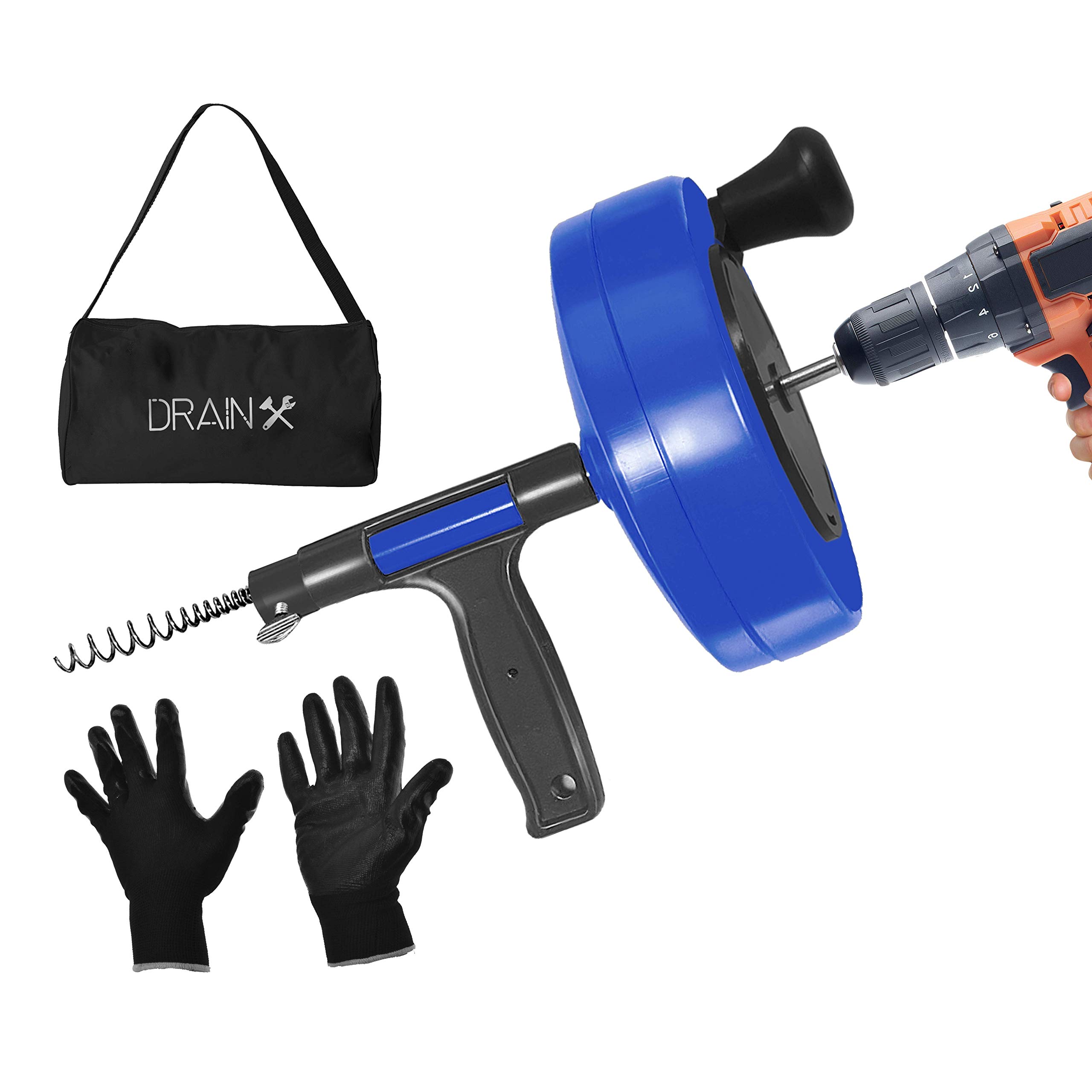
Before we discuss how to snake a drain, we must familiarize ourselves with the tool. One will need a coiled wire, also known as the drain snake, to snake a drain.

The standard method to snake a drain is to use this wire connected to an auger, which causes the wire to spin and move in the gutters.

An auger is usually a tool used to bore holes into things. For example, a drill Is a kind of auger. Most home plumbing snakes are hand-operated, using a rotating handle or crank to release and manipulate the cable to snake a drain effectively.

Another method that plumbers use to snake a drain is to use a motorized drain snake. These are similar to the manual ones but much more extreme.

The tool uses a motor to spin the coil, making sure no residuals of any kind are left in the pipes, but this method to snake a drain is mainly used when the clogging is very severe or for toilet drains.

HOW DOES A DRAIN SNAKE WORK?

  1. Because of the flexibility of the drain snake, it can bend and fold in commercial or residential plumbing systems without getting stuck.
  2. Begin to snake a drain by advancing the coil down the pipes until it finds the clog in the gutter.
  3. When it’s encountered the blockage, it collects and destroys any hair or built-up residuals because of the flexible nature of the corkscrew-shaped coiled spring at the end and the spinning of the auger.

snake a bathroom drain

Let’s Snake a Drain Like a Pro

Here are the main steps that professional plumbers take to snake a drain.

drain snake process

GEAR UP AND GET READY

Put on an apron or work clothing since there may be a lot of splashing and overall messiness to snake a drain, the spinning coil, and the intensity of the blockage. Also, remember to lay down a towel or cloth beneath the space before you start to snake a drain not to get any grime or scum on the tiles.

You can check out different types of drain snakes and choose one for your next project.

gears for drain snaking process

The next step usually consists of removing the p-trap, but place a bucket underneath the drain if you plan on doing this.

The p-trap is a curved connection pipe connecting the sink drain to the primary drain system of the building. Its curvature is to remove any air bubbles and gas stuck in the gutter through the drain.

If PVC pipes are installed at your house, you can remove them with your hands or if your pipes are made of steel, using a wrench is most viable.

Starting to Snake a Drain

After preparing to snake a drain, it’s time to get started. Place the corkscrew-shaped end of the drain snake onto the pipe and thread it in to begin snaking a drain.

After threading the snake through your pipe, you can have a slow stream of the cold-water flow down the drain to help loosen up and clear all the built-up materials.

One thing to remember when you want to snake a drain is to not forcefully lodge the auger down the drain as you may damage the internal pipes, drain entrance, and the actual drain snake.

If the snake drain is too big for your drain entrance, you can either remove the entry or return your auger and purchase a more suitable option.

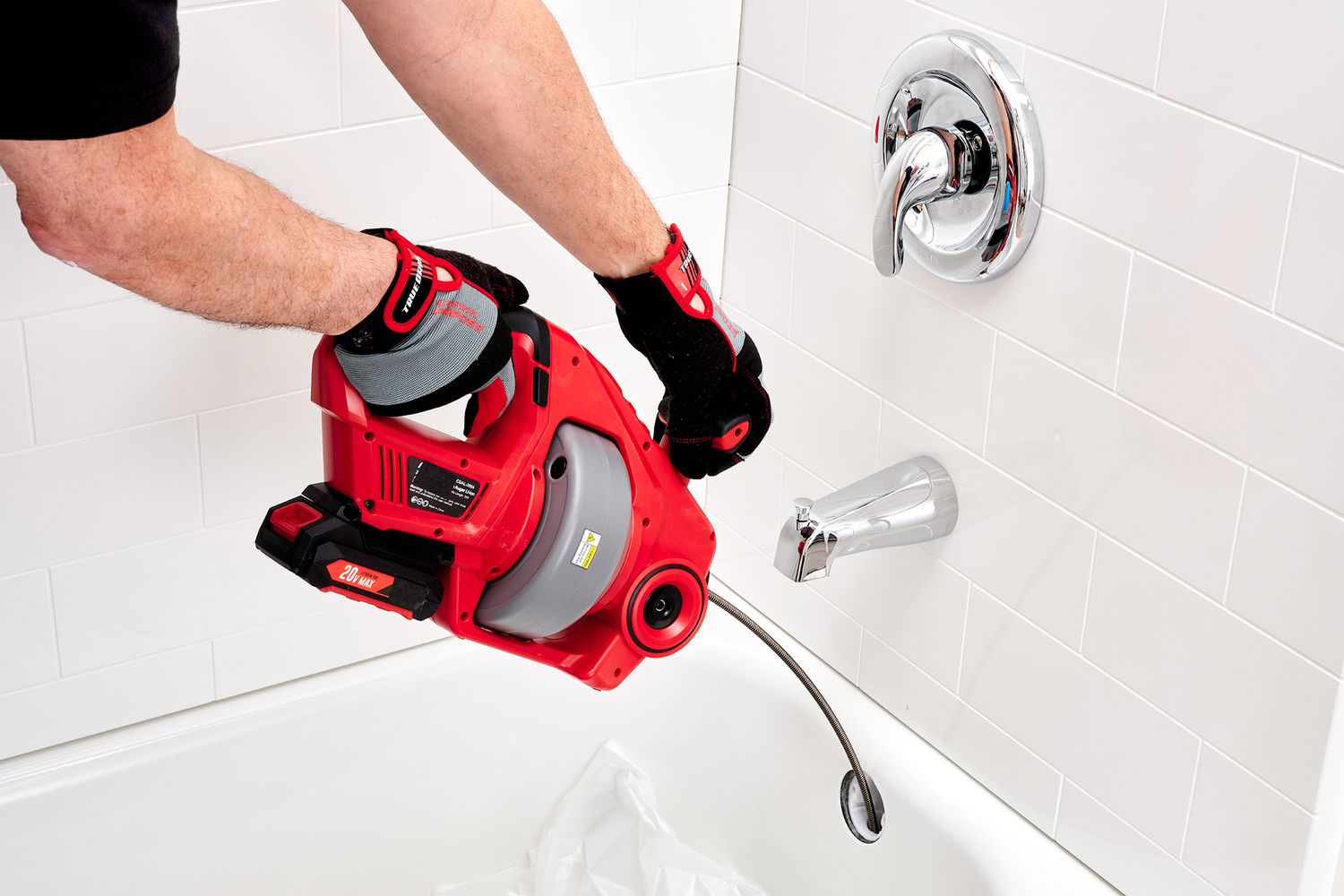
using drain snake to unclog bathtub

Snaking a Drain

After pushing the coil down enough that you encounter the clog, the next step to snake a drain is to start rotating the auger handle. This, in turn, spins the coil and its wider end to scrape the inside of the pipe.

While spinning the drain snake, remember to slightly push and pull the wire down to clear more materials, but don’t jam it there. If you hear a scraping or crunching noise at any point, stop immediately, check your pipe, reposition the coil, and start again.

Pull the Auger out

After snaking a drain for a while until you feel like the blockage has been removed or at least reduced. Slowly and carefully pull the auger out to avoid dropping the materials stuck to it back in the drain, resulting in another drain blockage.

Test the drain to see if the water is flowing steadily. If the answer to that question is yes, your gutters are unclogged. But if there’s still slow drainage, you can try to snake a drain again or use more heavy-duty tools.

Finishing Snaking a Drain

After reaching your desired outcome, reinstall the p-trap and ensure it’s tight to prevent leaks. Put the drain entrance back if you’ve removed it, and check the water drainage one last time.

5 Easiest Ways to Unclog Bathroom Sinks

If the water in your sink does not drain after a minute or two, you most likely have a slow-running drain. Slow running or clogged bathroom sink drains are a common household problem regularly caused by hair clumps or residue from hygiene products that have built up and eventually caused a blockage. Many people rely on chemical solutions to unclog bathroom sinks as a quick fix, but many more practical and non-corrosive ways solve the problem.

Also, many people avoid dealing with a clogged drain and don’t unclog bathroom sinks in their homes. But if left unnoticed, the problem can amplify to an entirely blocked pipe that is much harder to deal with. It doesn’t have to be challenging to figure out how to unclog bathroom sinks and if your bathroom sink is clogged and you’re ready to find a solution, follow the steps below.

Using boiling water to unclog bathroom sinks

Before explaining the benefits of boiling water to unclog bathroom sinks, you must know that if the residential plumbing drainpipes in your bathroom are made from PVC, this method is not recommended due to the chance of melting your pipes.

Using boiling water can be an excellent remedy to unclog bathroom sinks if the blockage is caused by residuals, built-up chemicals, and soap scum. Fill up a pot or a kettle with water and bring it to a boil. When your water is ready, pour it directly down the drain in 4 to 6 increments of approximately half a cup and wait for it to unclog bathroom sinks.

It is important to note that your drain must be empty when pouring the water in, make sure to do this at least 15 to 20 minutes after the last time you used the sink’s faucet. If the reasons for the blockage were chemical residuals or soap scum, this method would easily unblock bathroom sinks.

Using vinegar and baking soda to unclog bathroom drains

Another easy DIY method that almost anyone can do instantly to unclog bathroom sinks is to use baking soda and vinegar. When vinegar and baking soda are combined, they have a chemical reaction that produces a lot of bubbling and fizzing that removes all stubborn stains and gunk that may be stuck in the drain, clearing bathroom sinks.

To unclog bathroom sinks with this method, you will need approximately 1/3 to 1/4 of a cup of both ingredients. Pour your baking soda down the gutter, then follow it with the vinegar; leave the mixture in the drain for approximately 24 hours to see the full effect.

We must say that it’s pretty important to not mix your baking soda with the vinegar outside the drain because you want the reaction to occur where the clogging is, and doing it outside of the drain and then pouring it in is very counterintuitive and might not unclog bathroom sinks.

Using a plunger

One of the easiest DIY methods to unclog bathroom sinks is using a plunger. Plungers are helpful for almost any type of clogging if you catch the problem at its early stages and do not let it grow into a total blockage, but it is vital to use the correct type of plunger. Standard toilet plungers have a flange at the end that restricts your plunging abilities when it comes to unclogging bathroom sinks. To unclog bathroom sinks, you must use a cup plunger.

To use this method to unclog bathroom sinks, first, you need to remove the drain stopper. This step is crucial because if you don’t remove the drain stopper, you will only be closing and opening the stopper instead of plunging your pipes. The second step is to center the plunger over your drain and place it on it to create a perfect seal, then move it up and down with a little force.

But beware that the gunk and trash stuck in your drain may come up to the sink with plunging, so be prepared to clean them out and not let them go back in the drain.

Unclog bathroom sinks with a wet-dry vacuum

Sometimes when dealing with a commercial plumbing blockage, the drains don’t clear by using boiling water, baking soda or a plunger. In that case, using a dry-wet vacuum can be a powerful way to unclog bathroom sinks, sucking everything loosened up or softened by the other methods and bringing them to the surface.

The first step to unclog bathroom sinks with a vacuum is to put your vacuum to the highest setting and cover the end of the hose with a towel to prevent any clumps from getting into your vacuum. Place the cloth-covered hose directly on top of your drain and seal the drain. Open your faucet and raise the water just over the towel to make an even better vacuum. Lastly, turn on the wet and dry vacuum, keep it on top of the drain, and watch it take care of business.

If you do this correctly, hopefully, you will hear your vacuum unclog bathroom sinks and bring gunk and hard minerals up in no time.


Using a drain snake or a wire

If none of the other methods worked to unclog bathroom sinks and send the residuals out of your pipes and into industrial plumbing systems, this one will surely do the trick. This method is saved for last because it’s the most involved and labor-intensive.

Drain snakes are coiled metal wires that have a broader tip to efficiently and effectively collect hair or destroy obstacles in their way. You can buy these coils at any hardware store and use them to unclog bathroom sinks. But if you don’t want to invest in a complete drain snake kit, you can use a hanging wire, straighten it and bend the end to shape it like a hook. Stick it down the drain and pull all the hair out. A drain snake does the same but is more advanced.


Best 5 Ways to Improve Water Heater Efficiency

One of the appliances in our modern homes with the highest energy consumption is the water heater. Do you want to learn how to improve water heater efficiency? If so, then read on. When you improve water heater efficiency, you can cut back on your heating costs.

There are several easy methods and modest investments you can make to reduce energy expenses, improve the performance of your hot water heater, and improve water heater efficiency, whether it is an electric or gas model.

Some of the tips provided are simple, and you can do them easily, while some will require you to get help from a professional. Depending on your needs, you might need residential plumbing, commercial plumbing, or industrial plumbing services to get an efficient water heater system.

Right-Sized Water Heater will Improve Water Heater Efficiency

Is your water heater the proper capacity for your home? You might believe that a smaller water heater makes them superior for saving energy, but you’d be mistaken. Why? Because an underpowered water heater is overburdened, it’s been heated too much, so while you use the hot water, the burner must be running continuously.

This doesn’t help to improve water heater efficiency. Large utility bills may result from that hot water heater running nonstop! Which decreases water heater efficiency. Instead, make an investment in a bigger water heater that can sustain the hot water demands of your household.

If your existing hot water heater seems to be in continual use, it could be time for an update that will improve water heater efficiency subsequently.

Keep an Eye on Particles in the Tank 

If you reside in a region where the water is hard, you are aware that this may have a considerable effect on the efficiency of water heaters. These minerals crystallize and deposit on the bottom of your hot water heater as the water is heated. This debris lowers water heater efficiency and then, over time, slows your water heater.

Emptying the water heater’s tank once a year can help maintain your tank by cleaning the debris to help improve water heater efficiency. You can do this yourself by reading company guidelines and safety instructions or call a residential plumbing service, commercial plumbing service, or industrial plumbing service according to your needs.

To Improve Water Heater Efficiency, Invest in a Tankless Water Heater 

Perhaps you have heard the questions concerning the efficiency of water heaters regarding regular tank and tankless options. Tankless versions are the latest, high-performance, and most efficient type of water heater. This type will require less effort to improve water heater efficiency.

They may give you an infinite supply of hot water while saving you up to 40% on energy costs. Tankless water heaters only operate when you’re actually utilizing the hot water, unlike conventional water heaters. This will improve water heater efficiency for your home.

Traditional water heaters heat the water and afterward keep it hot, switching on and off to keep water held in a big reservoir heated for hours, even when not in use. But on the other hand, tankless water heaters switch on when you turn on the hot water tap and off when you turn it off, resulting in significant savings over traditional tank hot water heaters, which makes this type an efficient water heater.

Improve Water Heater Efficiency by Insulating the Water Tank and Pipes

The tank and pipework of your hot water heater can be considered the source of heat and energy loss. It will lose less heat if you install more insulation around the storage-style water heater. Especially with gas-fired water heaters, install the insulating according to the requirements of the manufacturer to avoid blocking the air inlet.

Consider insulating the water tank and the external pipes to save the most energy and improve water heater efficiency, preventing heat loss as freshly heated water travels from the water heater to its final destination. Insulation blankets are reasonably priced and can significantly lower your energy costs!

While you try to improve water heater efficiency, be sure not to block the water heater’s top, bottom, thermostat, or burner for gas tanks or the thermostat for electric tanks. Insulate hot water pipes as well. It is more likely that you won’t be wasting energy and resources the next time you use hot water if the water in hot water pipes remains warm after you run the tap. This makes a lot of difference in improving water heater efficiency.

Turn Down Your Thermostat

Simply decreasing the hot water heater’s thermostat can have a substantial impact on your energy bill and help to improve water heater efficiency, just like you’d do with your heater during the winter or your air conditioner during the summer. A hot water heater’s factory setting is normally 60 degrees Celsius.

By decreasing your water temperature by just 10 degrees, you could save 3–5% on your overall water heating costs. It’ll also improve water heater efficiency. If your thermostat is broken or does not display the temperatures, it might be a bit difficult to improve water heater efficiency this way, but it is not impossible. You can just use a thermometer to get the required temperature.

If you have young kids, they may be at risk of accidentally burning themselves because a temperature of 60 degrees Celsius is too hot for human skin tissue. Lowering your thermostat to 50 degrees Celsius is the best way to improve water heater efficiency while also lowering this risk factor. 

All hot water pipes in new home construction need to be insulated. Except for pipes that are easily accessible, such as those in a basement, insulating pipes in older homes can be fairly complex and may not be worth the effort.


An alternative system, such as a solar water heater, will be able to improve water heater efficiency in general and satisfy a larger portion of your needs.

4 Reasons Why Tankless Water Heaters Can Increase Your Home Value

Tank-style water heaters are common in many households, but are they really the best choice for your house? They quickly run out of hot water in times of need, are far from energy-efficient, and may even cause some safety hazards. The better choices are the tankless water heaters.

On top of that, tank-style water heaters need frequent maintenance by a plumber to check everything according to a home plumbing checklist to keep them running properly, emptying the tank and washing everything due to rust and sediment is what an average owner of a tank water heater either needs to do themselves or pay for someone to do it for them. Another issue is that if you don’t completely insulate your water heater and its pipes the heat of it can damage its surroundings.

On the other hand, tankless water heaters (also known as instant water heaters or on-demand water heaters) have none of these issues and offer a cost-effective, space-efficient, and endless stream of hot water which is much more desirable in the long term. Tankless water heaters are generally your best option for residential plumbing if you’re considering replacing your current water heater

In this article, we describe in detail 4 reasons why you should consider investing in a tankless water heater.

1. Energy Efficiency of Tankless Water Heaters

Generic tank-style water heaters on average store 40- to 50- gallons of water while a burner constantly heats the water whether it’s being used or not, in this process a lot of thermal energy is wasted just to keep the water warm for when it’s going to get used.

Instead, tankless water heaters only produce hot water when you want to use it, therefore significantly lowering your energy usage and effectively lowering your utility bill. Research shows that tankless water heaters can be 24%-34% more energy-efficient than a common tank-style water heater, and that equates to on average saving 100$ on utility bills annually.

2. Life Expectancy of Tankless Water Heaters

On average tankless water heaters last for 15 to 20 years. In contrast, a common tank water heater lasts for an average of 10 years making instant water heaters an even more valuable addition to your household.

In addition, tankless water heaters offer a longer warranty period, some even going up to 20 years which is over the average lifespan of a tankless water heater, meaning that if something happens or you have any problems with your tankless water heater you rarely need to pay any additional expenses for repairs or replacements making this investment even more sensible.

In the event you have any problems with your tankless water heater, your vendor will most likely provide a professional plumber suited and geared with the best plumbing tools ready to deal with the problem at hand.

3. Tankless Water Heaters Are Compact

Tankless water heaters are commonly around the size of a small suitcase and are mounted on walls to take up even less space while tank-style water heaters are commonly cylinder-shaped, 60 inches tall and 20 inches in diameter.

Depending on the size of your house, the number of its residents, and the amount of your hot water usage, they can vary in size and power. Choosing the appropriate tankless water heater for your house is quite important when buying one.

If you purchase too small of a tankless water heater you will have the problem of your instant water heater not being able to produce enough hot water to your demand. However, if you decide to purchase one that is bigger than you need, you will have to pay extra while never using the tankless water heater to its capacity.

Contact a plumbing service around you and use their counseling so they can design a residential plumbing system best suited for your needs.

4. Tankless Water Heaters Are Safe

Unlike tankless water heaters, tank-style ones can pose a lot of dangers to your living space. Since they always store a significant amount of water on hand and as these water heaters are technologically dated, they do not have built-in safety valves which result in valve blockages or overheating which can cause an over-pressurized tank.

Having a large and pressurized container in your basement or garage isn’t safe and there have been reports of explosions that tear through walls and roofs and cause permanent damage to houses.

Another common risk with the safety of tank-style water heaters is that usually they are left in a basement or garage and forgotten about, given that an unmaintained water heater usually has leaks your house will slowly grow mold that can cause serious health hazards or even affect the structure of the house and make it unstable if left unnoticed.

Having a tankless water heater in your house is a very advantageous asset, understanding the benefits and correctly purchasing crucial home appliances can greatly increase the value of your home and even simplify your daily life.


4 Types of Outdoor Drains

Consider installing outdoor drains if you have a lot of excessive rainwater on your property after a strong storm or snow melt. Or you have been calling plumbing services or your local plumbers too often in the rain and snow season to help you drain the excess water around your house that has been standing around for too long. Excessive water that comes into contact with your home’s foundations can cause structural damage or basement leakage, so it’s a good idea to start researching outdoor drains as early as possible.

This article will go over several types of outdoor drains and how they are used to reduce the danger of flooding. Hopefully, you can make up your mind, and the only time you need to call plumbing services to hire a plumber is when you want to install one of these draining systems for your home by their professional plumbers according to your needs.

Click for plumbing services.

Outdoor Drains Types

Aside from potential damage to the structure, stormwater with nowhere to go might flood and ruin your sidewalk, driveway, garden, or lawn. You can hire a plumber specializing in residential plumbing; they can reroute the water, addressing the drainage problem, which could help you save a lot of time and money in the long run.

Depending on your specific location and demands, there are various outdoor drain styles to choose from. Dry wells, French drains, trench drains, and catch basins are just some of the most common outdoor drains.

What Is a Dry Well?

A dry well is built to guide water toward the lowest point in your yard using gravity. Instead of just puddling, it gathers in the well before diffusing onto the surrounding ground. This is an excellent option for collecting rainfall from gutters and roof downspouts, capturing greywater, and decreasing soggy soil in low sections of your property.

What Is a French Drain?

A French drain is suitable for flat yards that have excessive water standing there. They are made of perforated pipes that are put around the foundation of your property in a gravel-filled long, narrow channel. This keeps water from pooling around the building structure, allowing it to drain down and away from the structure, where it cannot cause damage or leak.

What Is a Trench Drain?

Trench drains operate similarly to French drains in that they move water away from the foundation of your house. If the nearby terrain slopes toward your property rather than away from it, a trench drain is a way to go.

The trench outdoor drains are often referred to as channel drains. Depending on your requirements, it can be manufactured from solid precast material or cast in place. To keep debris out of the canal, a grate is installed. Water enters the trench, built to divert the flow of water away from your house and property.

What is Catch Basin Outdoor Drains?

Catch basins resemble storm drains seen on roadways and parking lots. They collect runoff and channel it to a reservoir or sump pump to transport water away from your property. They are normally put at the lowest point on your land, and if you have a big property, you may need to install more than one to guide all of the water away effectively.

A catch basin is made of an extensive underground tank with a metal gate at ground level to keep trash out. Once in the tank, the water may be drained out using a sump pump. This is a wonderful option if you have a lot of excess water standing around your property and your soil doesn’t drain effectively. This might be the ideal choice for you if you have a lot of clay soil.

Professional Drain Repair and Installation

Standing water may cause floods, property damage, and bug infestations. Proper drainage around your property can help reduce the danger of flooding, property damage, and insect infestation. However, installing outdoor drains yourself is a significant undertaking that necessitates a certain degree of knowledge. If you discover that your property needs extra drainage, it is essential to make contact with professional plumbers before proceeding. When you call a plumbing services office, they’ve got professional plumbers and residential plumbing professionals that can assist you. There is adequate training, equipment, and competence to complete the task correctly.

Contact O Plus Plumbing NOW if you need services for outdoor drains.

Bathroom Sink Plumbing – 5 Essential Parts

Every residential plumbing in Toronto has different parts and sections. One of the areas that play an essential role in your home’s systems is the bathroom sink plumbing and its critical components.

But why do you need to have bathroom sink plumbing occasionally? Every home plumbing fixture, for example, bathroom sinks, has several parts that can become blocked, break or leak.

As soon as you feel you need bathroom sink plumbing, contact professional plumbers in Toronto and let them solve the problem.

However, if you want to avoid frequent problems in your bathroom sink plumbing, it is crucial to know the primary parts of the system to choose and buy the most efficient and highest-quality ones.

Primary Parts of Any Bathroom Sink Plumbing System:

  1. Shutoff Valves
  2. Supply Tubes
  3. Drain Tailpiece
  4. P-Trap
  5. Drain Pipes

Now, let’s get into the details about these essential parts of your bathroom sink plumbing system.

1- You Need Good Shutoff Valves for Your Bathroom Sink Plumbing

Shutoff valves are the first essential part of your bathroom sink plumbing. These small valves are usually made from metal or plastic and are located between the water supply pipes and the supply hoses that connect to the tailpieces on the bathroom sink faucet. Most shutoff valves used in bathroom sinks have an oval handle that you can turn to close and open the valve.

One of the best things about shutoff valves in your bathroom sink plumbing is that you can turn off the water supply at the sink without shutting off the water of your whole home.

You can install most of the shutoff valves onto the water pipes without soldering, which benefits most homeowners who want to replace them with a DIY process.

Shutoff Valves in The Bathroom Sink Plumbing are Seen in Pairs:

  • The first valve is used for controlling hot water.
  • The second valve is for controlling the cold water.

2- Use High-Quality Supply Tubes

All of the bathroom sink plumbing systems have supply tubes that need to be high-quality to avoid frequent plumbing issues. High-quality supply tubes are made of:

  • Braided wire mesh
  • White plastic mesh
  • Gray solid plastic
  • Chromed copper

These bathroom plumbing parts are generally connected to the tailpieces and shutoff valves with attached nuts. If you have issues with your supply, it is recommended to hire a professional plumber to fix them.

bathroom sink and drain system

3- The Drain Tailpiece is Also Crucial for Your Bathroom Sink Plumbing

Drain tailpieces, also known as sink tailpieces, are straight sections of pipes that connect to the bathroom sink drain fitting. If your bathroom sink has a pop-up drain, the lever rod connects to a port on the back of this particular bathroom sink plumbing part.

Usually, a high-quality drain tailpiece is attached to the drain fitting with a slip nut, a threaded ring that you can tighten or loosen by hand, or channel-type pliers. A tapered plastic washer under the slip nut creates a watertight seal for your bathroom sink plumbing system.

Note: Remember to use tailpieces in your bathroom sinks that have slip nut joints since if you ever drop anything into the sink drain, you can easily disassemble the joint and retrieve your item.

4- Every Bathroom Sink Plumbing System Has P-Trap

Your bathroom sink plumbing system has a P-Trap which is made up of two primary parts:

  1. U-Bend
  2. Trap Arm

These two parts of your P-Trap are curved sections that allow your sink to connect to your home’s sewer line. The curved trap is used in the system to provide a safety feature for holding standing water and preventing sewer gasses from rising up and out of your bathroom sink drain.

Every time you run water down the bathroom drains, the old wastewater in the bend is flushed out and replaced with new water. You or your plumber need to assemble the P-Trap parts with slip-nut joints.

5- Be Precise When Choosing Drain Pipes

The last part of your bathroom sink plumbing system is the drain pipe. It is connected to your residential plumbing system from one side, and the other side is connected to the trap arm with another slip nut joint. With slip nut joints, replacing or repairing the pipes will be easier.

Most of the drain pipes used in bathroom sinks are three inches in diameter. However, depending on your fixture, you can choose a smaller or larger one.

How to Know if Your Toronto Home Requires Drain Replacement Service? – 11 Signs

Residential plumbing is one of the essential systems of your Toronto home. Without an efficient and properly functioning home plumbing system, you will not have access to clean water, relaxing hot showers, and even the ability to use the toilet. This article has broken down everything you need to know about finding out if your Toronto home requires drain replacement services.

What are Residential Plumbing Drains?

Residential plumbing drains are integral elements of any plumbing system. Drains are the primary way that wastewater is carried away from your home. Home drains function similar to rivers in nature that lead to the ocean. All of your plumbing drains lead to the sewer system.

The sewer line is connected to Toronto’s public sewage lines.

Many homeowners in Toronto neglect the importance of drains until something goes wrong. Typically, home drain issues sneak up on homeowners, and the signs often do not seem like a severe problem. Many signs can indicate your plumbing system requires a drain replacement service.

Keep reading to discover the signs that will tell you to contact professional plumbers in Toronto.

1: Bad Smells

Do you smell any unpleasant odor that comes out of your sink? Whether it smells like sewage or rotten food, this means that your plumbing system requires drain replacement service or professional cleaning. Two main reasons why bad smalls come from your home plumbing system are:

  • Clogged Kitchen Sink
  • Clogged Main Sewer Line

2: Slow Drains Indicate You Need an ASAP Drain Replacement Service

Sinks, tub showers, and other residential plumbing fixtures that have slow water drain indicate that your plumbing system requires a drain replacement service.

Sometimes slow drain can suggest something more serious, such as backed-up sewer lines. So, it is better to contact professional residential plumbers to solve the problem.

3: Leakage in Your Residential Plumbing System

Whenever you see leakage in your home plumbing fixtures or pipes, you should know that there is a problem with your draining system.

If you want to make sure that your home plumbing system does not have leaking problems, you need to do two simple tasks:

  1. Check underneath your sink and see if there is any dampness or pooling of water.
  2. Check the plumbing pipes in your basement.

4: Corroded Plumbing Pipes

Corroded plumbing pipes can cause severe problems for your home system since they worsen over time. Although tubes are designed to last anywhere around 20 to 100 years, depending on the environment and the material of your plumbing pipes, corrosion will still happen.

If you see any corroded plumbing pipes in your home, you need to contact professional plumbers for drain replacement service.

5: Pooling Water is Another Sign that Drain Replacement Service is Required

If you see water pooling near or in your home, there is a problem with your home plumbing system since water is meant to stay within the plumbing pipes. When you see this problem, call your local Toronto plumber at O Plus Plumbing Inc. to inquire about the drain replacement service.

Common areas where water pooling might occur:

  • Lawn
  • Basement
  • Around the Shower
  • Under the Plumbing Fixtures

home plumbing drain systems

6: Puddles on the Lawn

If the patches of your lawn look lusher than other sections, it means you have some problems with your system, and you may need a drain replacement service.

Another sign that indicates issues in your drainage system is having unusual puddles in your garden.

7: Seeing Pests in Your Yard

Check your sewage line or call professional plumbers for inspection as soon as you see pests, rats, or flies infesting your yard. Having problems near your sewage line is not a good thing. But, the good news is that a drain replacement service with O Plus Plumbing can fit it.

8: You Need Drain Replacement Service if Your Home’s Water Stains

If you notice water stains, it is often a sign of a flood or a leak. Although this may seem a simple problem, it can cause severe damage to your water system if you neglect it.

9: Increased Water Bill

Are you experiencing higher water bills in your Toronto home? If yes, this means your plumbing system has severe problems and could be anything from a leaking line to an issue with the water supply line.

With O Plus Plumbing’s drain replacement service, you will have water bills equivalent to your consumption.

10: Inspecting Any Issues with Your Toilets

Some issues with your toilets can indicate a blocked sewage line which will require drain replacement service or professional cleaning. For example, never ignore the following signs:

  • Gurgling toilet
  • Water Comes Up While Flushing

11: Low Water Pressure

Is your water pressure lower than it has always been? This is another common problem in residential plumbing systems which seems like not a big deal but actually indicates a big issue. The main reason for low water pressure is the clogged drains. When a part of your drain pipes gets blocked, the blockage makes it harder for the water to flow through the lines resulting in lower water pressure.

Schedule One of Our Pro Plumbers in Toronto Today!

If you have noticed even one of the signs we talked about earlier, do not hesitate and call O Plus Plumbing Inc. in Toronto for a drain replacement service. Our professional plumbers will fix your clogged or damaged drain pipes.

You can conventionally book an appointment with O Plus Plumbing Inc. in Toronto online or through our phone number. We will send a professional team with uniforms and equipped with all modern and necessary plumbing tools.

What are 5 Different Types of Home Plumbing Pipes?

Residential plumbing systems have come a long way from the clay piping used in ancient Greece to supply water for homes and carry sewage and wastewater away. Plumbing supply manufacturers produce pipes from various materials that can provide hot and cold water to every plumbing fixture in your house. Residential plumbing pipes also create a vital drain and vent system for your house. Although there are different types of home plumbing pipes, five of them are used more in homes, which are:

  • PEX Home Plumbing Pipes
  • PVC Residential Plumbing Pipes
  • ABS Pipes
  • Copper Plumbing Pipes
  • Galvanized Pipes for Home Plumbing

Although all types of home plumbing pipes are practical in specific applications, not every piping is suitable for all situations. Additionally, some of the lines are not up to code. Modern building codes set forth measures your system must adhere to to ensure public safety and protect your home from damage. Now let’s get to the details about these home plumbing pipe types.

PEX Home Plumbing Pipes

PEX or cross-linked polyethylene home plumbing pipes are affordable plastic tubing famous for residential water supply lines since they do not leach traces of corrosion or rust into the water like some other old types of pipes.

Installing cross-linked polyethylene residential plumbing pipes is considerably easy and also, since they are a flexible material, working with PEX tubes is much easier.

One of the best things about these home plumbing pipes is that you can use several connection methods, which allows you to work with different plumbing tools.

PEX home pipes come in three primary colors: blue for cold water, red for hot water, and white for cold or hot water.

PVC Residential Plumbing Pipes

PVC or home plumbing pipes made from polyvinyl chloride are often used for home sewage systems. Professional plumbers use DWV, a type of home plumbing piping used in your house’s drain, waste, and venting systems.

PVC plumbing pipes are suitable for applications with low pressure and low-temperature requirements. With this said, you should use these residential plumbing pipes for the toilet drain line and not for carrying hot water.

ABS Home Plumbing Pipes

Residential plumbing pipes that have a black appearance and are used in a sink, toilet drain, or tubs are generally made from ABS or Acrylonitrile Butadiene Styrene,

ABS home plumbing pipes are another type that you can find in DWV systems, and it functions similarly to PVC piping. Most of these residential plumbing pipes come in the exact sizes as PVC piping. However, ABS is not as popular as it is currently.

ABS home plumbing pipes are more durable than PVC but should not be exposed to direct sunlight.

Copper Home Plumbing Pipes

Copper home plumbing pipes have been used in residential plumbing systems for decades. So it is likely to find them around showers, sinks, tubs, and other plumbing fixtures in older and newer houses.

These residential plumbing pipes are the most popular type of water supply lines since copper does not affect drinking water quality.

The biggest drawback of copper home plumbing pipes is that the installation process requires a propane torch that is not DIY-friendly. If you do not apply enough heat to the joints, the solder will not flow into the joint, and you won’t have a proper seal. Moreover, too much heat can inhibit the appropriate sealing of the connection.

Galvanized Pipes for Residential Plumbing Systems

Galvanized pipes are not used in modern constructions and homes. However, it was once used for almost every residential property, so you can find them in older houses.

Galvanized home pipes were perfect when homes had lead pipes since they provided a lead-free alternative. If you have galvanized waste and drain lines, you will find fittings and replacement pipes such as galvanized tees and elbows.

Galvanized home plumbing pipes had a big issue; they tend to rust over time. If your residential plumbing system has galvanized water supply pipes, it would be best to replace them with PEX or Copper residential plumbing pipes to ensure you will have clean and clear drinking water.

If you are sure that you want to retrofit your galvanized piping, using PEX would be the best option since it is flexible, and you can install it inside the walls easily.